USL-Cleveland State Soccer Stadium Proposal Stalls
City documents show Cleveland State’s proposed $100 million stadium and $250 million mixed-use project stalled amid a lack of support from Mayor Justin Bibb’s administration.
by Ken Prendergast, NEOTrans | Mar. 10, 2026 | 10:00 AM

Courtesy of CSU, USL Cleveland
This article was published through an exclusive content-sharing agreement with neo-trans.blog.
A proposal by Cleveland State University (CSU), the United Soccer League (USL) and local backers to build a $100 million soccer stadium and $250 million in supportive development where the Wolstein Center arena now stands appears to be, at best, on hold.
Its emergence may have served only to delay and dramatically increase the construction costs of a competing soccer stadium. And its apparent retreat is due to the lack of “a collaborative, partnership-driven approach” with Mayor Justin Bibb and his administration, according to a city document secured by NEOtrans.
Last week, NEOtrans reported that backers of three sporting venues in Downtown Cleveland want what the Cleveland Browns got for their Brook Park stadium — state funds for their facilities.
The Browns got $600 million earmarked for their stadium. The Cavaliers, Guardians and Cleveland Soccer Group (CSG) are collectively seeking $125 million in Ohio Cultural and Sports Facility Performance Grants from the the Ohio Sports and Cultural Facilities Fund created last year by the Ohio General Assembly.
The funding isn’t assured. A Franklin County Court of Common Pleas magistrate yesterday issued a preliminary injunction against the state’s proposed use of unclaimed funds for stadiums while a pending lawsuit is heard on the constitutionality of the funding mechanism.
CSG is requesting a $19.9 million state grant for a nearly $80 million, 10,000-seat soccer stadium on 13.6 acres of land on East 9th Street Extension south of Interstate 90. The site is owned by the Ohio Department of Transportation. The Cleveland Metroparks has an option to buy the land, but be paid by CSG.
Conspicuous by its absence from the list of state-funding applicants was the CSU-USL stadium proposal. After publishing the March 3 article, NEOtrans received a response from CSU to an earlier inquiry as to why it did not submit an application for a state grant.
“Cleveland State University is currently in the process of engaging a real estate development consultant to make recommendations about the future of our campus facilities,” said Kristin Broka, associate vice president, university marketing and communications at CSU.
“We are refraining from making major changes that impact campus facilities until we complete the review and selection process and begin work with the consultant,” Broka added in her e-mail to NEOtrans.
In November 2025, CSU issued a request for qualifications from prospective real estate development consultants to take an updated look at a long-term plan for its 85-acre campus at the east end of Downtown Cleveland. Facing tight finances, CSU’s plan will match facility improvements with the availability of potential funding.
Kevin Murphy, a real estate attorney at Cleveland law firm Calfee, Halter & Griswold LLP, is a spokesperson for the USL stadium/development project. He was asked last week what is the status of the project in light of CSU’s official statement which made it sound like the project is, at best, a long way off.
“At this time, we are not commenting, and we are referring all media inquiries to CSU and their statement,” Murphy said in an e-mail sent to NEOtrans on March 9.
He is a co-founder of USL Cleveland LLC with Tim Junglas of JBird Ventures, a Chesterland-based real estate firm. Kevin Murphy is not related to Michael Murphy, co-founder and CEO of CSG with its President and Co-Founder Nolan Gallagher.
CSU’s Board of Trustees voted Nov. 20, 2025 to seek the real estate consultant and a long-term facility plan. That came one week after Mayor Bibb’s office issued a memo to the backers of the competing soccer stadium proposals stating why it was supporting CSG’s and not CSU-USL’s.
“The (Bibb) Administration is not prepared to issue a letter of support for the USL stadium at this time,” noted the Nov. 13, 2025 memo, secured by a public records request from NEOtrans. “USL and its affiliates have proposed multiple site concepts within Cleveland.”
The Bibb Administration said the realization of either facility is contingent on state funds. It explained its decision on which stadium project to support was made after conducting an analysis using “Soccer Stadium Evaluation Criteria.”
“In addition to the submission prepared by USL, the City and several civic partners received multiple legal memoranda from USL or its representatives since the Soccer Stadium Evaluation Criteria was shared with USL,” the mayor’s memo added. “While such communications are within the proposers’ rights, they have not reflected a collaborative, partnership driven approach.”
A source said Bibb was willing to support public funding for only one soccer stadium, preferably one shared by all soccer interests. The source, who spoke on the condition of anonymity, said the USL had threatened the city with legal action if it was not selected.
Justin Papadakis, the USL’s deputy CEO and chief real estate officer, did not respond to two e-mails seeking comment on the matter. Papadakis has Cleveland links. He received a law degree from CSU and worked in real estate in Greater Cleveland until about a decade ago.
Bibb Administration officials said they do not oppose the CSU-USL stadium or the project’s “partners pursuing this private initiative independently of the City,” the memo added.

The source said city officials and Rock Entertainment Ventures CEO Nic Barlage held a September 2025 meeting with both soccer stadium parties but couldn’t reach an agreement. The memo confirmed this.
“The administration still considers a shared stadium the most prudent approach to maximize potential public benefit, operational efficiency, and land-use impact,” the memo said. “The parties met in September 2025 but were unable to reach alignment on a joint model for facility use.”
The Bibb Administration reaffirmed its support for CSG’s project, support it had previously declared in a May 2025 letter from then-Chief of Integrated Development Jeff Epstein who since left to run the Port of Cleveland. He was succeeded by Tom McNair who previously was Bibb’s director of economic development.
“The City commends the organization’s (CSG’s) continued momentum in project planning and capital formation,” the memo continued. “CSG’s growing coalition of civic and community partners reflects meaningful advancement and represents a vital element of the project’s long-term success.”
CSG had funding arranged for a $50 million Gateway South soccer stadium in January 2025 and was ready to build, the source said. But the competing CSU-USL soccer stadium plan and the city’s desire to support only one application to the Ohio Cultural and Sports Facility Performance Grant Fund delayed CSG’s efforts.
Because of the delay, inflation and the effects of federal tariffs on construction materials caused the Gateway South soccer stadium’s costs to skyrocket to nearly $80 million, the source added.
READ MORE: Cleveland Soccer Group Goes Back to the Future: Meet Forest City Cleveland
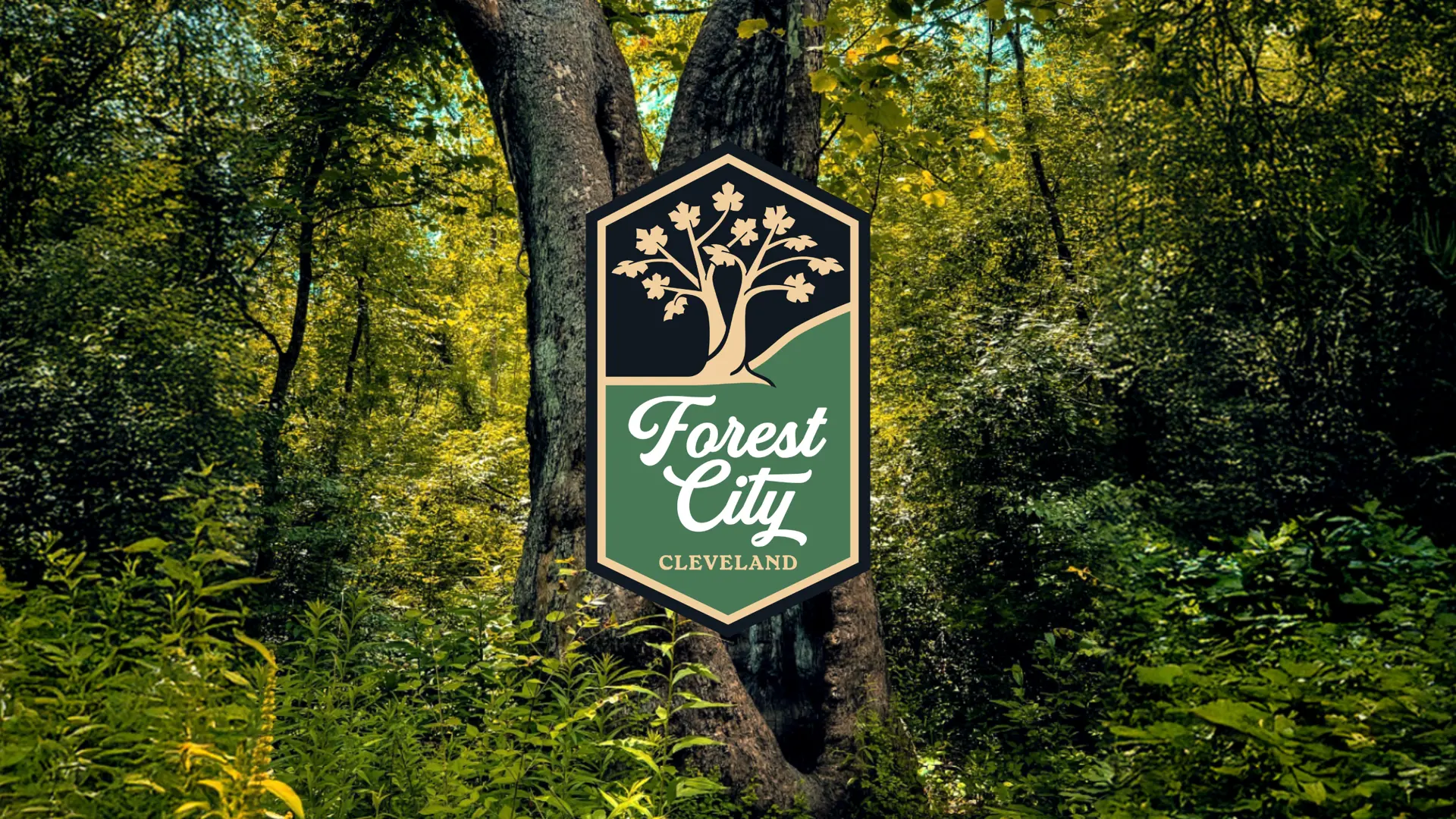
Two pro teams were named to play here — a newly branded Forest City Cleveland Major League Soccer (MLS) Next Pro men’s team and a Cleveland team in a new Women’s Premier Soccer League Pro (WPSL Pro) league.
Gina Prodan Kelly, CSG’s chief marketing officer and women’s team co-founder, said she had no comment on the two-stadium competition except to discuss the MLS Next Pro team’s chosen name, logo and marketing.
Those features of Cleveland’s new professional men’s soccer club were unveiled its identity today by CSG. She said the brand Forest City Cleveland was shaped by thousands of fans across Northeast Ohio and is “rooted in the city’s history, resilience and future.”
“The brand was developed through an extensive community engagement process involving more than 3,000 participants from across Northeast Ohio, including players, families, longtime supporters and new fans,” she said in a written statement.
Kelly said the process included multiple surveys, several rounds of focus groups and a series of one-on-one interviews that shed light on how fans wanted their sports teams to make them feel.
“We believed from the beginning that this club should be built with Cleveland, not simply introduced to Cleveland,” Kelly added. “More than 3,000 people helped shape what Forest City Cleveland would become. It reflects the city’s past, but even more importantly it represents the future we’re building together.”
Creative direction for the project was led by a two-person design team with ties to Cleveland, the professional soccer community and world-class brands. It included former soccer players Alex Kocher and Mo Fitzgerald.
Kocher, founder of Easy Friday Co., a creative consultancy, is a Cleveland native who grew up playing for local clubs Medina Rangers, Greater Akron Premier and Cleveland United, before attending the University of Akron. He created branding for pro soccer teams in Portland, OR, Chicago, Lexington, KY, and his new hometown of Richmond, VA.
Fitzgerald, founder of design studio Play Street in Burlington, VT, is a brand strategist and a former professional soccer player with the Portland Thorns of the National Women’s Soccer League. She runs a creative strategy studio focused on the intersection of sport, art and culture.
For more updates about Cleveland, sign up for our Cleveland Magazine Daily newsletter, delivered to your inbox six times a week.
Cleveland Magazine is also available in print with immersive features, helpful guides and beautiful photography and design.

Ken Prendergast, NEOTrans
Ken Prendergast is a local professional journalist who loves and cares about Cleveland, its history and its development. He has worked as a journalist for more than three decades for publications such as NEOtrans, Sun Newspapers, Ohio Passenger Rail News, Passenger Transport, and others. He also provided consulting services to transportation agencies, real estate firms, port authorities and nonprofit organizations. He runs NEOtrans Blog covers the Greater Cleveland region’s economic, development, real estate, construction and transportation news since 2011. His content is published on Cleveland Magazine as part of an exclusive sharing agreement.
Trending
-
1
-
2
-
3
-
4
-
5