
Anxiety Is Rising Among Students. Here's How Northeast Ohio Schools Are Responding
We’re not talking about ‘School Scaries.’ Anxiety is mounting across schools, and students are tapping into layers of support and creative programs to reset boundaries and refresh their focus.
by Kristen Hampshire | Mar. 18, 2026 | 8:50 AM

Courtesy Laurel School
The school day ends, but the pressure’s always on.
Group chats buzz. Notifications stack. A test score appears in an app before the backpack hits the floor. Between digital classrooms, performance pressure, athletics schedules, family stress and a flood of heavy news that hits in real-time updates, where is the off button?
What about boundaries? And what’s the net effect on today’s students?
“We’re seeing multiple pressures converge, and stress has become more chronic and not necessarily situational,” says Cassey Fye, deputy director of Greater Cleveland’s National Alliance on Mental Illness, which provides mental health education, early intervention tools and support programs for students, families and educators. “There is a constant loop of school life, social life and home life with blurred lines and very little separation.”
No wonder the character Anxiety was added to the cast of Pixar’s Inside Out 2.
The cumulative weight of layered stressors onto students’ developing brains and nervous systems — kids still learning how to cope — is driving anxiety into the center of student mental health concerns.
This isn’t just a case of School Scaries.
The Centers for Disease Control and Prevention reports 11% of children ages 3 to 17 have diagnosed anxiety, based on data from 2022 to 2023. Nearly 1 in 5 children in this age group had been diagnosed with a mental, emotional or behavioral health condition. And in a 2023 CDC Youth Risk Behavior Survey, 28.5% of high schoolers self-reported frequent anxiety and depression symptoms.
But the good news is, this school-aged generation, often referred to as Gen Alpha, is more open to talking about how they feel and why — along with asking for help and supporting peers.
‘Pretty heavy information’
So, what’s driving an increased wave of anxiety across all school grades?
For young learners, activities ramp up earlier, eating into free-play time that’s foundational for developing social-emotional skills.
“We are seeing increased rates of stress and anxiety at younger ages, and this is a national trend that has been on an upswing for some time,” says Laurel School’s Tori Cordiano, Ph.D., a consulting psychologist and co-director of Laurel School’s Center for Research on Girls. “A culture of doing more and doing better has crowded out time for play and establishing developmental skills that we know support kids’ wellbeing.”
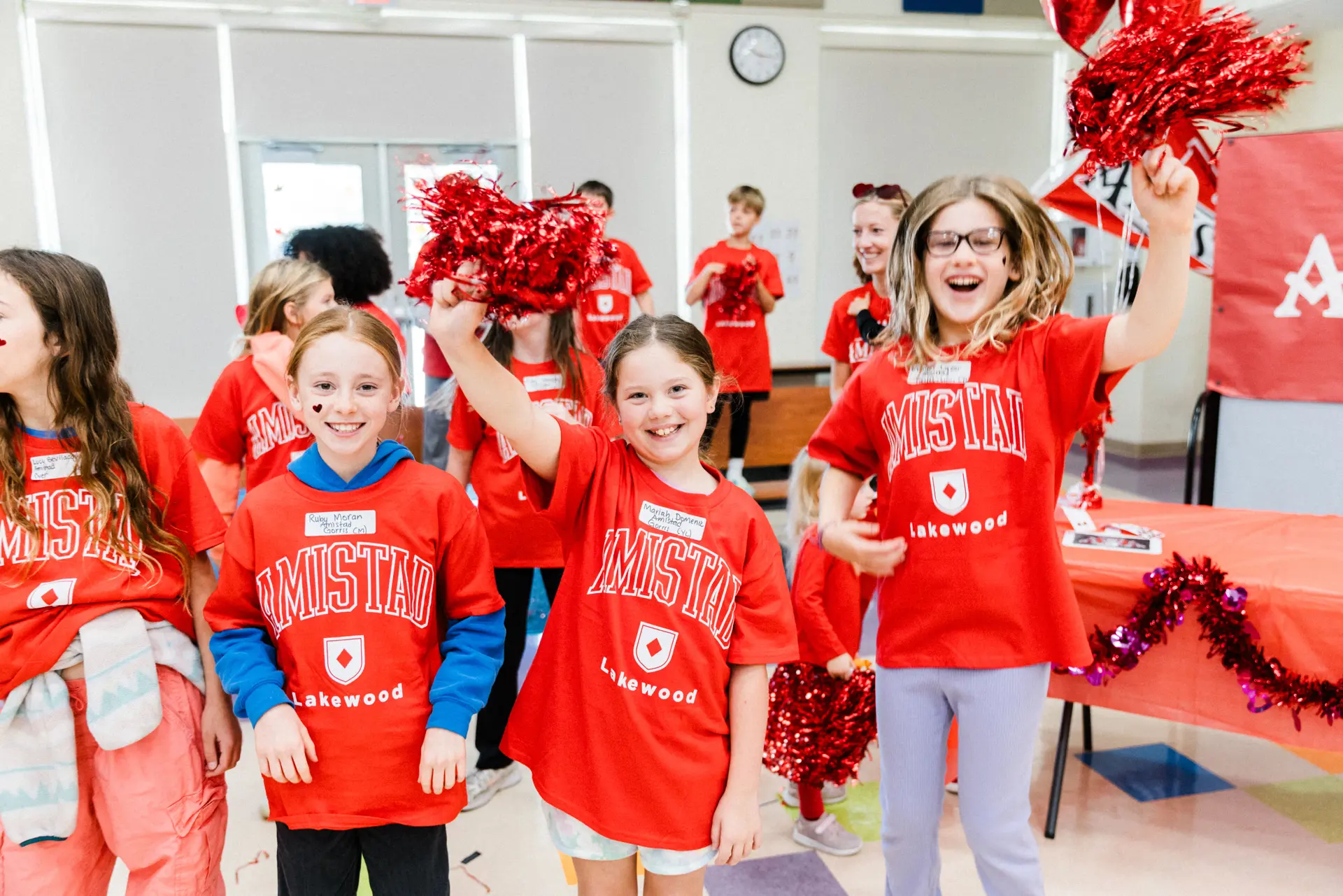
Lakewood City School District’s Stephanie Morgan, director of student services, says equipping schools with wellness specialists has been integral to social-emotional instruction. And at the preschool level, there’s more structured emphasis on inclusion and social skills.
“The implicit learning is not happening to the degree it used to,” she says.
Older students face performance pressure on academics, social activities, athletics, college choices and future careers.
“Some anxiety is self-imposed because these students have high expectations for themselves, and they’re trying to balance everything successfully,” says Kelly Andrews, a school social worker at St. Edward High School and moderator of the school’s Life Improvement & Mental Empowerment club, more commonly referred to as LIME.
Across the K-12 continuum, technology piles on more emotional baggage.
“These are kids who have basically grown up with some kind of social media, and we are realizing its long-term effects,” Andrews says.
She points to a “comparison factor” that triggers self-worth battles. Streams of status updates often fuel insecurity and worry.
“There’s a big push to teach kids about responsible digital footprints and to set limits,” she says
St. Ed’s has even had programs that address the topic of responsible digital use.
“There are a lot of big things in the world that kids are aware of at younger ages,” Cordiano says, “and while that can be fantastic for finding areas of interest, it also means they’re engaging with some pretty heavy information they may not be ready to handle.”
Meanwhile, being always “on” online can make navigating tough relationship situations real messy.
“Fifteen years ago, there could be conflict at school or with friends, which is totally normal and healthy,” Cordiano says, “but today because of technology, kids are still engaged and it’s harder to create boundaries.”
The aftershock of pandemic social distancing is real: more time online, less time in the hands-on world.
“Across the board, we see increased anxiety, reduced tolerance for the uncertain and unpredictable, and a lingering increase in screen time and constant exposure to social media and news,” Morgan says.
What’s more, kids are facing more economic insecurity related to housing, food and employment.
“There are shifting societal expectations and basic needs are more of a challenge than they’ve been in recent history,” Morgan notes, citing attendance as a potential signal of mental health battle.
‘There is no wrong door’
With all this high-frequency noise coming from all directions, schools are addressing anxiety head on.
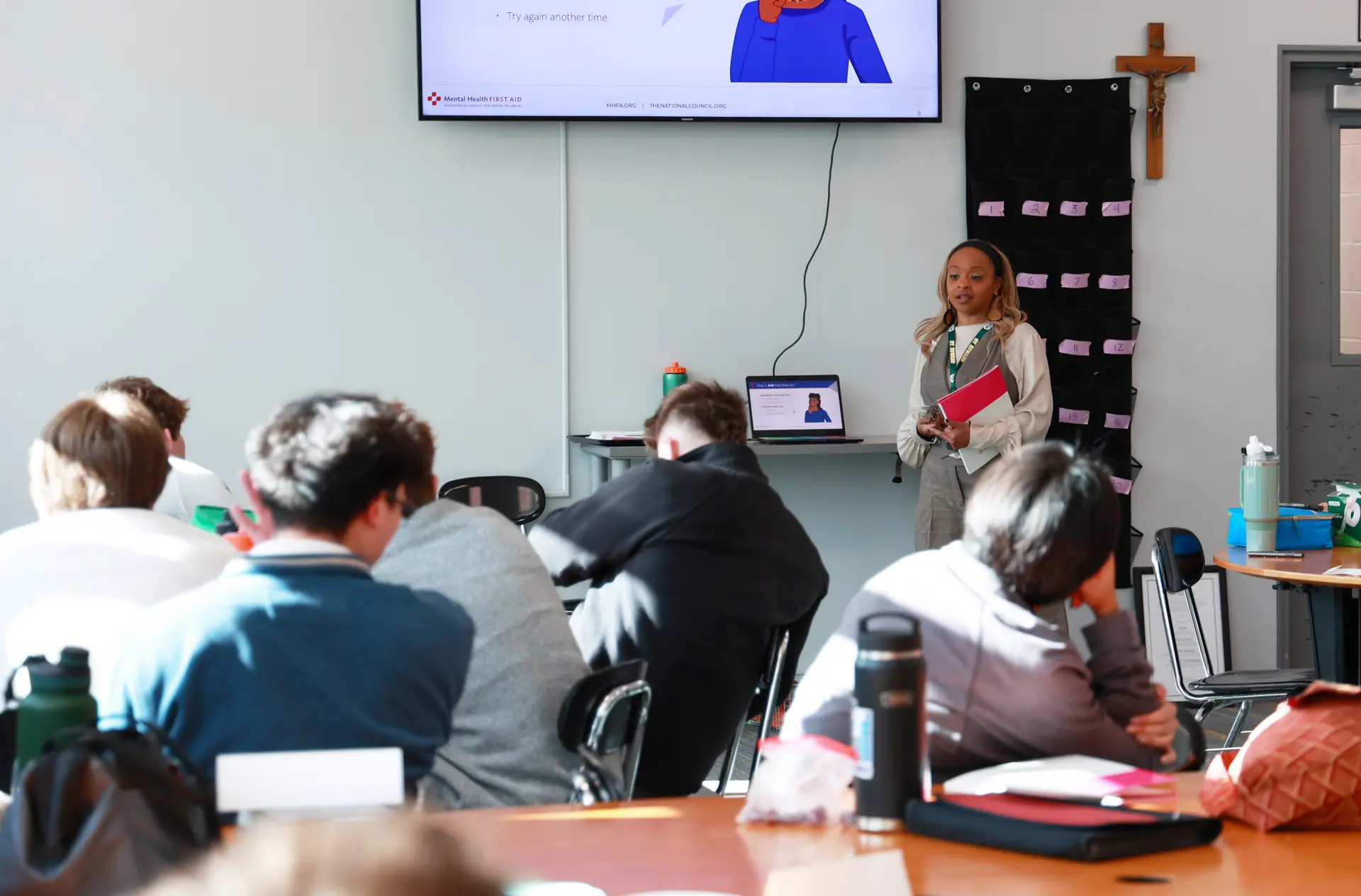
At St. Ed’s, 25 students received mental health first-aid responder training last fall. Monthly Zoom workshops for parents span topics from substance use and suicide prevention to executive functioning.
The LIME club focuses on eliminating the stigma of seeking help.
“Because it is student-driven, they come up with the ideas, and it has been very well-received,” Andrews says.
LIME holds town halls for students and outreach events such as a No Shave November to recognize men’s mental health needs, and affirmation “fun stuff” such as a Cocoa Comfort Station and “Best Part of Your Day” testimonials. The grassroots club bubbled up from the student body.
“A group of students were interested in changing the culture of mental health,” Andrews says.
Breaking down barriers in an all-boys school calls for creativity, she adds. Last year, St. Ed’s hosted an Out of the Darkness Walk in partnership with the American Foundation for Suicide Prevention to raise money for suicide awareness. The school plans to host the event again this year.
“Historically, it was like, ‘We don’t talk about feelings. I’m supposed to be tough and suck it up,’” she says. “We’re role modeling to these kids that you can be a strong guy and have emotions.”
At the top, LCRG offers parent forums that tackle topics in a research-backed format based on the school’s data and global insights. Last fall, a seminar covered the impact of AI. Others included sleep, growth mindset, anxiety and stress.
Parent coffees provide smaller group sessions for connecting. In school, mental health awareness and strategies are baked into the curriculum. For Laurel students in kindergarten through fifth grade, GatorAid (named after the school’s mascot) addresses social-emotional topics delivered weekly by the in-house school psychologist in the classroom.
Laurel’s Upper School girls participate in seminar weekly activities centered on issues such as disordered eating, depression, suicidality, self-harm, and safe and unsafe relationships. Some seniors at Laurel School have completed capstone projects centered on well-being and life “beyond the screen.”
“They have hard-fought social and emotional relationships,” Cordiano says, “and they want to put that knowledge to good use and think about how to make a tricky developmental period more manageable.”
For more updates about Cleveland, sign up for our Cleveland Magazine Daily newsletter, delivered to your inbox six times a week.
Cleveland Magazine is also available in print, featuring immersive stories, helpful guides and beautiful photography and design.
Trending
-
1
-
2
-
3
-
4
-
5