Snowboarder Red Gerard on the 2026 Winter Olympics, Repping Cleveland and His Likely Retirement: Q&A
The Westlake native became a star as a teenager with a surprising gold medal win. Now, the 25-year-old looks back on his Olympic experiences and forward to life after snowboarding.
by Mark Clavin | Jan. 27, 2026 | 5:00 AM

PHOTOGRAPHED BY MARK CLAVIN
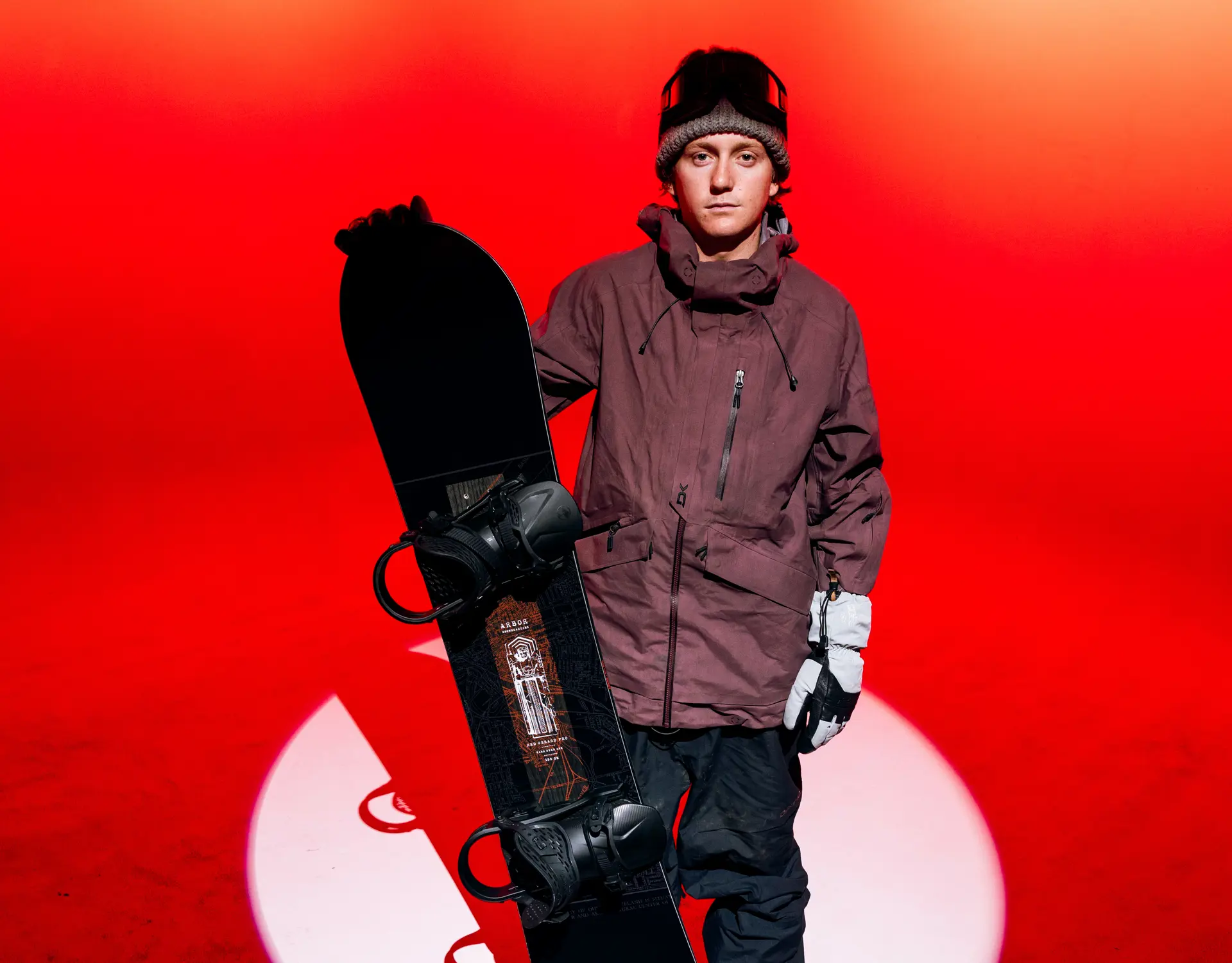
This is probably Red Gerard’s last Olympic Games. The Westlake native is just 25 years old, but he’s already one of the sport’s most decorated competitors, with almost a decade of pro snowboarding under his belt. In the 2018 Games in Pyeongchang, South Korea, he shocked the snowboarding world by becoming the first American to win gold in the sport and the youngest Winter Olympics gold medalist since 1928. He’s since won the U.S. Burton Open, one of the sport’s most prestigious competitions, and three X-Games golds, though he narrowly missed the podium at the 2022 Beijing Games. As a teen, he moved from Northeast Ohio to Colorado, but he stays tethered to Cleveland through sports, family and a deep appreciation for the locals who support him. His new pro model board from Arbor even features one of the Guardians of Traffic statues from Hope Memorial Bridge. Before going for gold one last time — “I don’t know if I’ll have another Olympics in me after this,” he says — he went deep with us on what snowboarding and the Olympic Games mean to one of the sport’s biggest stars. -Dillon Stewart
Cleveland Magazine: Why do you still have Cleveland in your U.S. Ski & Snowboard team bio, even though you’ve lived in Colorado and California longer at this point?
Red Gerard: It is where I am from. It is where my family is from. And it’s important to represent where you’re from and where you were born on a big stage like the Olympics.
CM: How do you stay connected to the city?
RG: I try to come back every summer or holidays sometimes. We’ve got a lot of family and friends in the area, all my cousins, my grandfather… and I love a good Ohio summer, honestly. Can’t beat it. And it is my city sports-wise. Whether it’s the Browns or the Cavs, those are my teams I am rooting for.
CM: Do you feel a lot of love from Cleveland?
RG: I do. A ton. It’s awesome. It means the world to me to have a city like Cleveland, that’s got so much grit to it, to back you. I love Cleveland for what it is. I love the trash talking that our fans and supporters do. I love the toughness to it all. There’s love behind it, and with sports, the fans really dive in deep for what they love. It’s cool to have a whole squad behind you like that.
CM: What’s your favorite place to snowboard in Northeast Ohio?
RG: Brandywine or Boston Mills, but we would also go to New York a good amount.
RELATED: Find out how Cleveland is putting its mark on the 2026 Winter Olympics.
CM: Do you feel more or less pressure going into this Olympics than you have in the past, since this is your third one now?
RG: I feel probably more pressure than the last two, just in the sense that qualifying early and not having to compete for a spot on the team this season brings another type of pressure. When I was 17, I didn’t really know what the Olympics were. I was focused on making the team, and then I didn’t realize how big the stage was. But after winning gold, I quickly learned that it’s a massive stage. I’m just not as much the underdog anymore. Getting gold in 2018 and then 2022 not really going the best way for me, there just seems to be a little bit more pressure and eyeballs on me to do better in a sense. But all in all, it doesn’t really matter. I’m just gonna try to do me, go out there and land runs and snowboard. Being older and having more experiences with it all, I know that it’s going to be a wild month. So, I am just gearing up, going to take it minute by minute, hour by hour and just have fun and enjoy it the whole way.
CM: Do you carry a chip on your shoulder like many do around Northeast Ohio?
RG: I try not to. I really try to go to every contest and just do myself. Just focus on the course, rail by rail, jump to jump, and just really try to take all the bigger picture stuff out of it like what I am supposed to do and who I'm competing against. If you take the Olympics out of it, essentially what I'm there to do is go there and hit eight features and try to win a slopestyle run and win every rail and jump I hit. So, I just try to break it down to make it be as simple as it really can.
CM: When you're competing on the world stage, do you feel like you're representing the U.S. and Cleveland or does that all disappear when you drop in?
RG: Yeah, but when you actually finally end up dropping in for your run, I feel like I always forget about all that and I really just try to treat it like every other contest that I do. But it's much harder when you’re at the Olympics. One of the coolest things is the fact that I get to represent Team USA coming from Cleveland, but when it comes down to it, I try to get that out of my head and just do a run.
CM: Are you dialed in like other professional athletes with your routine, diet and exercise?
RG: I’m pretty relaxed. I’m not on a diet. I just eat healthy. I don’t eat a ton of sugar, and this and that. I exercise but not obsessively. I just try to treat my body decently well. When it comes to the morning of a contest or whatever, I can’t eat, and I drink a lot of coffee and try to drink some water, as well. But other than that, I treat it like every other day.
CM: You don’t eat before a contest?
RG: I can’t. I am too nervous. I have no appetite. Mostly just coffee.
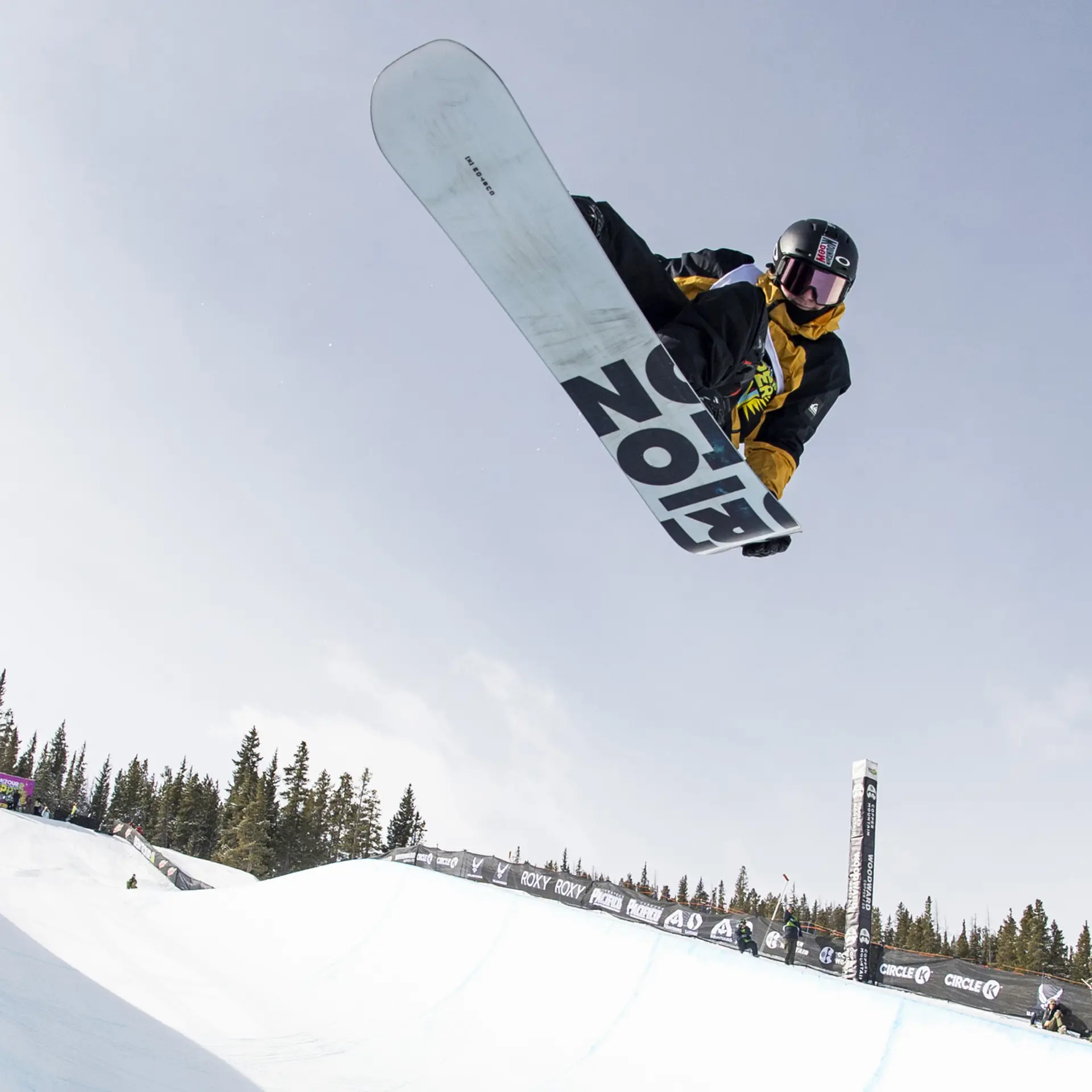
CM: Although you just snowboard, technically, you’ll be in two events at the Olympics. Do you have a preference between slopestyle and big air?
RG: I do. I’ve always considered myself a slopestyle rider, not a big air rider. Going to the Olympics for snowboarding, you have to do both big air and slopestyle to be on the team. I’ve always liked the flow of slopestyle. It just suits my riding better, and you can add your own little twist and style. With big air, it’s just one jump, and you’re left with doing the biggest trick out there.
CM: How much has snowboarding changed since your gold in 2018?
RG: The tricks have gotten way bigger. More spins to do before you land.
CM: What constitutes a good run to you? Landing every trick cleanly, pushing progression or walking away knowing you rode the way you wanted to?
RG: Yeah, I mean, a good run to me means you get to the bottom, and you’re panting for breath and need water, and you’re just tired. But there’s no better feeling to me in the world than landing a slopeside run. I mean, just about every time I think, I can’t believe I just did that. All the work pays off from going to these training camps early in the year in the fall and learning all these big tricks. And then when you’re able to put it all together in a slopestyle, it’s a really great feeling.
CM: Do you practice the same run all week, leading up to the actual contest, once you feel out the course, since every course is different? Or do you mix it up, and you have to wait until the last minute to really throw your best stuff?
RG: It’s a leading-up thing. You come there with a run in your head, and you just try to lead up to it, lead up to it, lead up to it, and then hopefully on finals day, you’re ready just to unleash the biggest run you got. You try to practice bits and pieces of it, and hopefully you can land it once or twice before contest day, but sometimes it’s just that day of the contest, and that’s all you get. And you just try to land it.
CM: Have you ever put a trick down in a finals run that you’ve never landed before that?
RG: Yeah, at the Burton U.S. Open out in Colorado. I had never done a backside triple cork, and I did it in the contest that day, and I think it actually helped me. I’d been wanting to try the trick for a while at the time, and just that extra bit of pressure pushed me over the edge.
CM: What's the biggest spin you enjoy doing, and then what's the biggest spin you have to do in contests?
RG: I enjoy doing 1080s (three full spins), and in contests, it's getting bigger and bigger. The 1800 and 1980 (five and a half spins) is the big spin right now, but I enjoy doing 1080s.
CM: How do you hold on to the creative side of snowboarding inside of a system built around judging and medals?
RG: Anytime you just drop in for a slopestyle, it is up to you. There’s a lot of creativity that you can put into a run depending on the course build. And that’s where snowboarding is able to bring its creativity and put a twist to the Olympics. The scheduling and judging don’t matter. Once you’re riding, you can really do anything you want.
CM: What is the percentage of tricks you do for the judges compared to the amount you do for yourself during your run?
RG: On that stage, it’s getting more and more — probably 90% of them are for the judges, I would say. If I can try to get 10% for me, or for a fun one that my friends will like, that's the goal.
CM: I would imagine your favorite memory is probably winning gold, but do you have a small memory from the Olympic experience that you would like to share?
RG: With COVID and no fans, it isn’t a secret that 2022 was not the best Olympics. We were just quarantined with our team and couldn’t do much. But what I did really enjoy there: It was just you and your teammates, and that’s all. I got so much closer to my teammates during those 23 days. Playing cards and talking trash, it felt like you're at home during the holidays with your family.
CM: How much are you looking forward to these Olympic games without COVID quarantines?
RG: Yeah. (pauses, exhales) I don’t know if I’ll have another Olympics in me after this. So, ending on the Olympics, where you’re not gonna be quarantined and having family there and fans there and it being in Italy, I’m massively looking forward to that Olympic experience because I honestly haven’t really felt like I’ve had one. In 2018, I went there, and I won in the very beginning of the window, and then went and did a media tour and didn’t really get to experience the Olympics. And then 2022 was quarantined with no fans. So I think, this time, just having a regular Olympics will be amazing.
CM: For those that only watch you in the Olympics, they might not know that you also have a very successful backcountry career. You wanna talk a little bit about the differences there?
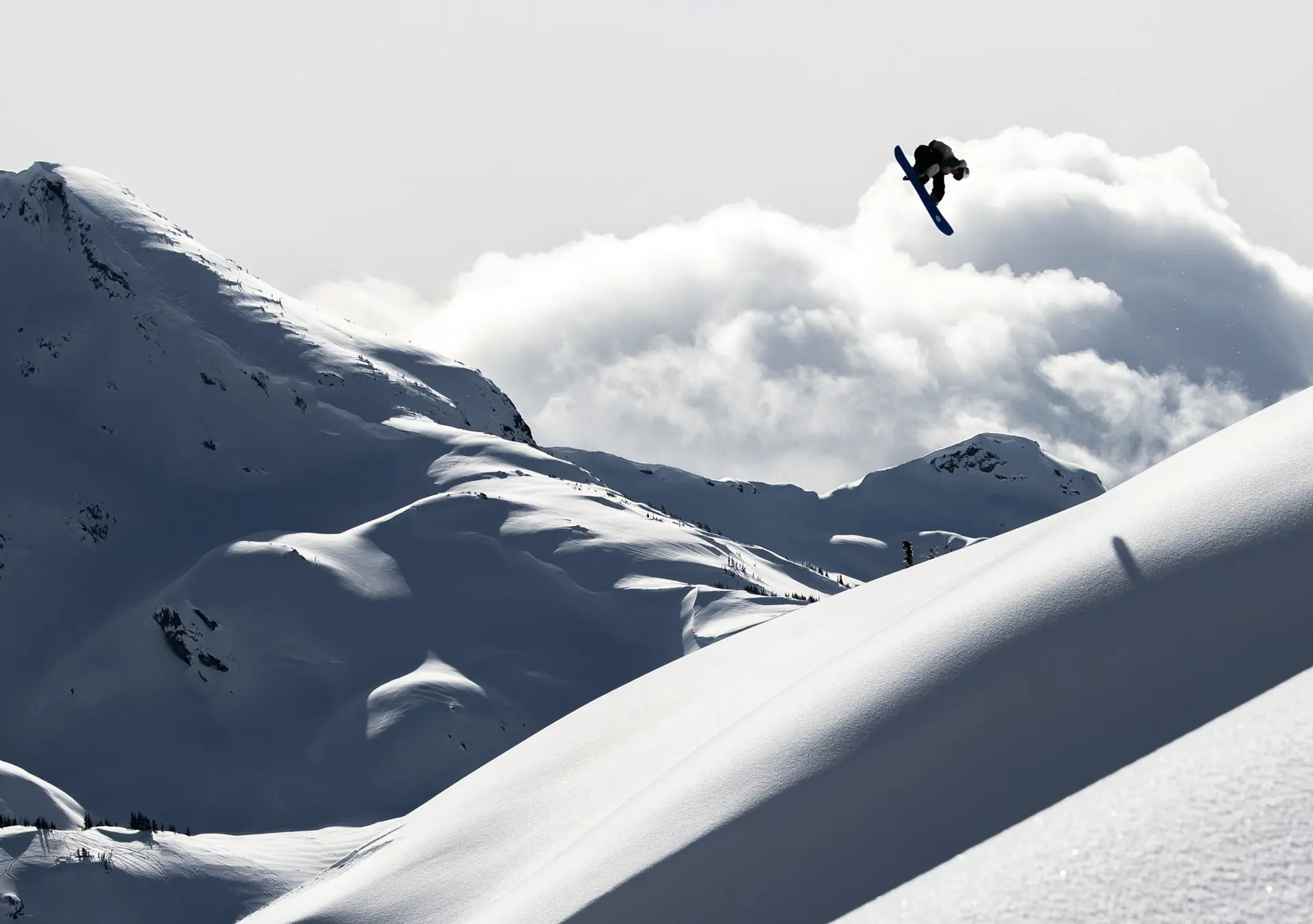
RG: The Olympics is a great thing for the reason of having people watch snowboarding and all that. But there is a whole different side to it, where you go out into the mountains and ride fresh snow and powder that’s up to your knees. And you try to go build some jumps or jump off a rock, and someone films it. And then at the end of the year, you get to put one of your favorite songs to that footage, and hopefully people are hyped on the way it turned out. But that’s a whole other side to snowboarding. I love the competitive side. I love going to the Olympics and doing all that, but I also highly enjoy going out into the mountains with your friends — and, luckily enough for me, my brother — and filming snowboarding and trying to make a great movie.
CM: You’ve also brought snowboarding to Cleveland in different forms, like when you come back and ride with kids at Brandywine or when you held your own video premiere here. Why do you think it’s important to always come back and show love and bring snowboarding here?
RG: Honestly, Cleveland’s just got such a great group of people there. They love to get behind people from the area and, honestly, that JOY (movie) premiere on the West Side of the city was the best snowboarding premiere I’ve ever been to. People were so hyped and so excited. Even the Boston Mills and Brandywine ride days, that was, like, the most amount of people I’ve ever seen show up when it was just my name on the poster. It was just so fun to see all the kids so hyped on snowboarding and taking laps with them and just sharing some good times.
CM: When kids from Cleveland see you on the biggest stage of the world, what do you hope they take away about snowboarding or just what’s possible from coming from this area?
RG: All of us up there snowboarding are really good friends. That’s the most important thing about our sport and the reason why I got into it and love it so much. If you can just find a good group of friends and try to go snowboarding on the weekends or really whenever you can get out there, you’ll learn why we love it so much and why it’s so cool. Just really having the right friend group to go out there and go snowboarding is everything.
RELATED: These local legends competed in the Winter Olympics over the years.
CM: Would you come out of Olympic retirement if Cleveland ever got the Winter Games?
RG: Yeah, (it wouldn’t) matter how old I am, I would try my absolute hardest if Cleveland got the Olympics to be there and if I wasn’t able to make it there as a snowboarder, I would work as a volunteer person for it.
CM: How do you mentally prepare for a moment where four years of work comes down to potentially one last run?
RG: I try not to think about it. The more you think about it, you just stress yourself out and all that. And like I’ve been saying, I really just try to take each moment for its moment and not get ahead of myself with thoughts.
CM: How do you unwind between contests or in the offseason?
RG: I like to play a lot of golf. Maybe go in the ocean.
CM: As a 25-year-old, do you ever think about life after snowboarding?
RG: It’s been, unfortunately, coming into my mind more and more as I get older. The honest answer is, I don’t know what I wanna do. I’m not going to be an Olympic snowboarder my entire life, but there are plenty of outlets in snowboarding to continue going down that route. The community is pretty awesome, and I have always really enjoyed hanging around it. So, if I could stay in snowboarding until the day I die, that’d be nice.
CM: There are some 50-year-old sponsored riders out there.
RG: If I could do that, that’d be awesome.
CM: Last one: You got anything to say to the people of Northeast Ohio leading up to this Winter Games in Italy?
RG: Yeah, shoot, have some fun. Go to your local watering hole and enjoy the Olympics.
For more updates about Cleveland, sign up for our Cleveland Magazine Daily newsletter, delivered to your inbox six times a week.
Cleveland Magazine is also available in print, publishing 12 times a year with immersive features, helpful guides and beautiful photography and design.
Trending
-
1
-
2
-
3
-
4
-
5