
Two Temples, Nearly 200 Years Apart: Exploring The Mormon Church’s History In Northeast Ohio
A new temple in Independence, scheduled to be dedicated this August, joins a historic temple in Kirtland that’s open for public tours.
by Annie Nickoloff | Aug. 13, 2026 | 12:16 PM

Photos courtesy of the Church of Jesus Christ of Latter-day Saints
Located in neighboring counties, just a 30-minute drive apart, two temples share two distinct parts of the Church of Jesus Christ of Latter-day Saints' story.
The church, widely known as the Mormon church, unveiled its new temple at 5997 Brecksville Road in Independence earlier this summer. Scheduled to be dedicated on Sunday, Aug. 16, it’s one of the church’s 200-plus temples located around the world, serving more than 17 million members, according to current church estimates. In Ohio, it joins one other operating temple in Columbus, for the state’s nearly 66,000 members in 132 congregations.
But nearly two centuries ago, there was just one temple — and it was being built in Northeast Ohio. The Kirtland Temple, a towering three-story building, still stands today in a sprawling park. The campus is open for tours led by members of the Church of Jesus Christ of Latter-day Saints, which purchased the historic property from the Community of Christ, a denomination in the Latter Day Saint movement, in 2024.
“If you look at it from a symbolic perspective, you have the temple (in Kirtland), and now we have this one (in Independence),” says author and historian Tommy Aardema, who is a member of the church. “This really is the second half of the story, of what took place there.”
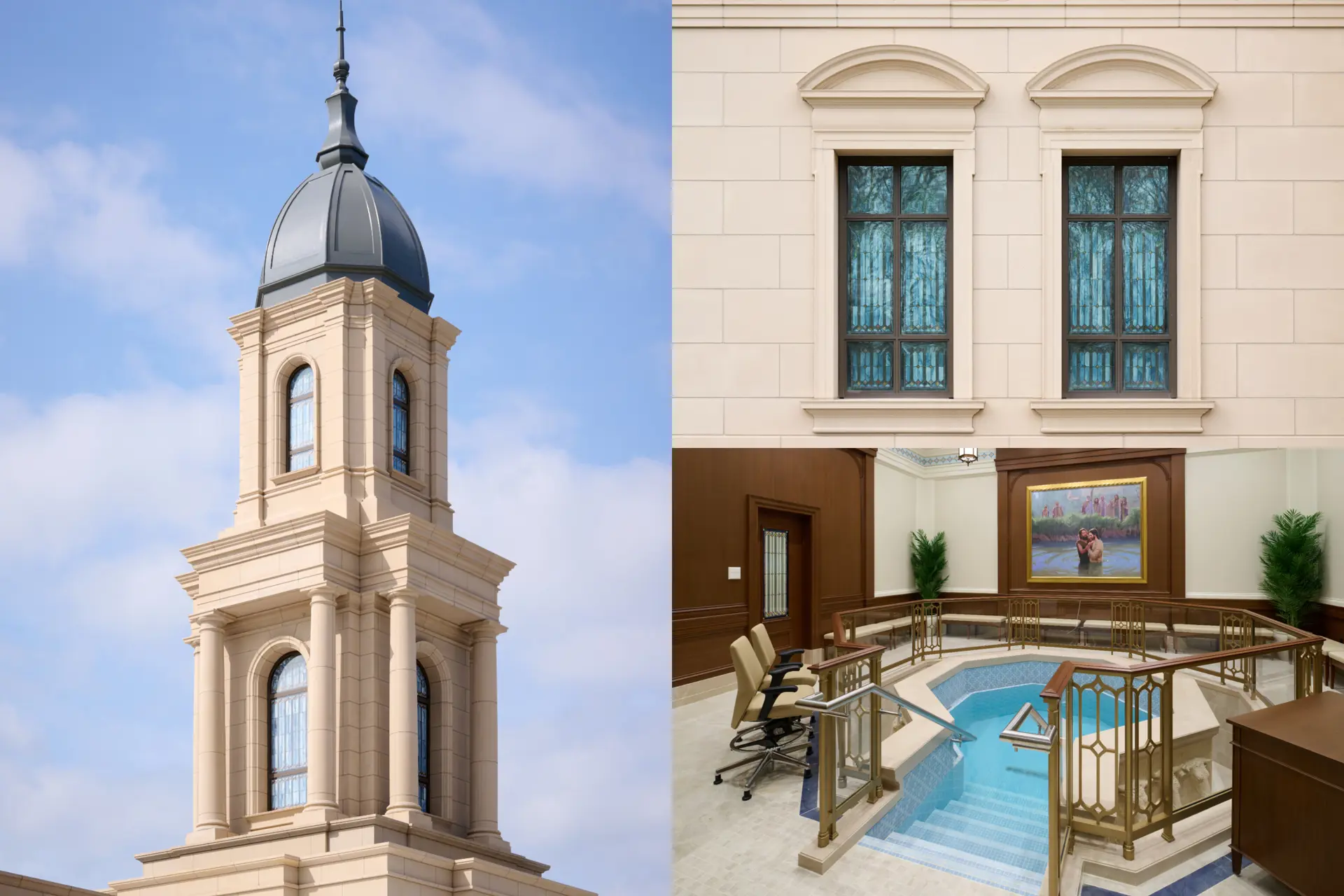
The new Independence building, like other Latter-day Saints temples, is considered a sacred space and is open only to church members of good standing once it’s dedicated. However, earlier this summer and before the dedication, the temple opened its doors to welcome members of the public and the media.
Wearing shoe covers to protect the flooring, we stepped through the building’s many spaces, which featured beige marble, floral carpet designs and stained glass windows. Church representatives said much of the structure was prefabricated offsite to allow for a quicker construction timeline.
While Latter-day Saints attend meetinghouses for worship and education, they only use temples for specific ceremonies. One of the Independence temple’s rooms holds a baptismal font, near locker rooms and changing areas. An instruction room hosts a large TV screen for religious instruction. The sealing room centers rows of chairs around an altar, for marriages.
“For us in our faith, a temple is a crowning act,” Aardema says. “Years ago, we would have to travel to Toronto or to Washington D.C., or even earlier, to Salt Lake City, to go to a temple, and now we have one here. It's an amazing blessing.”
There are a few nods to the church’s Northeast Ohio history inside the modern building. Near the front door, on the right side of the room, is a pastoral landscape painting of the Kirtland Temple.
“It started with the Kirtland Temple,” Aardema says, “and today we’re about to dedicate another temple, literally in the shadow of the temple.”
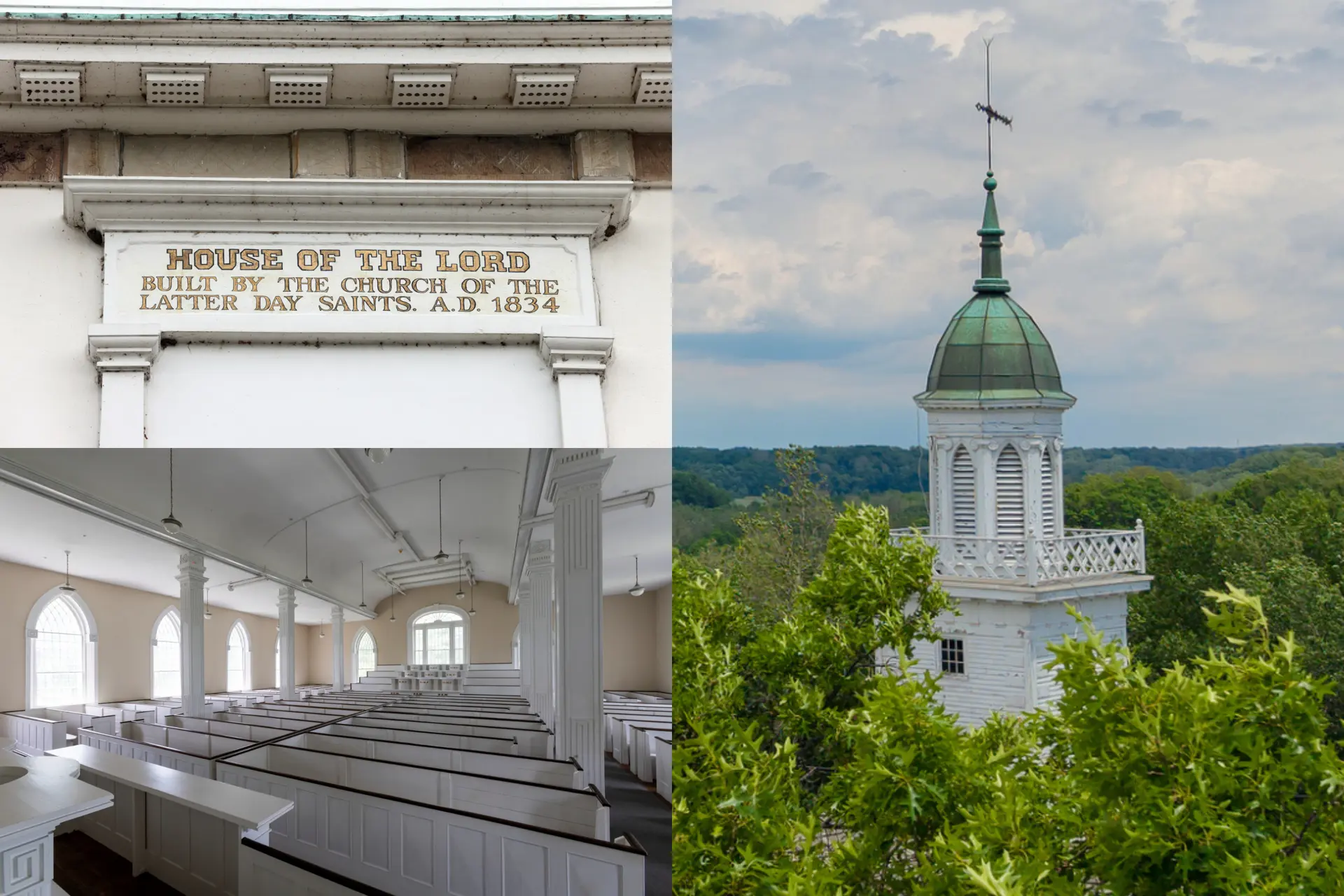
The first temple in Kirtland was named a National Historic Landmark in 1976. The building still features some of the original woodwork from its construction in the 1800s, though it’s been restored and renovated since those early years.
A tour starts with a trek up to the third floor, which was once used for classrooms and meetings. A bell tower, currently in disrepair, is blocked off, though volunteers mention they hope for it to be operational in the future. The first and second floors host halls for worship, with adjustable pews facing pulpits at both ends of the room.
This building, built by a surrounding community of church members, was only used for a few years. In 1831, one year after publishing the Book of Mormon, Joseph Smith moved his church from New York to Northeast Ohio. The group built its first temple in Kirtland by 1836. Shortly after, in early 1838, Smith and the Church of the Latter-day Saints were mostly driven out of Ohio and moved westward, following a national financial crisis and the collapse of the church’s Kirtland Safety Society bank.
Smith, a controversial figure who had launched a presidential campaign, was killed in 1844 in Illinois. After his death, the church fractured, and many of its members convened in Salt Lake City, which remains a hub for the church today.
“There were some things that were hard, and we made mistakes,” Aardema says. “We learned from them. We kept growing, and it’s rolled forth to do better. Today, it’s one of those things to look back on, and to get strength from our past, to learn from some of our mistakes, and to then move it forward.”
For Aardema, the history within the Kirtland Temple became the focus of his 2025 book, A House of God: Kirtland Temple Stories and Revelations, which looks at both the spiritual events members claimed to experience in the building, along with historic contexts around them. The Aurora resident has written several other works about Northeast Ohio hot spots and their complicated connections to early church history.
“I love that I get to live in this place where we have such history,” he says. “We as members can go to these places and feel that and have that connection to the past.”
For more updates about Cleveland, sign up for our Cleveland Magazine Daily newsletter, delivered to your inbox six times a week.
Cleveland Magazine is also available in print, featuring immersive stories, helpful guides and beautiful photography and design.

Annie Nickoloff
Annie Nickoloff is the senior editor of Cleveland Magazine. She has written for a variety of publications, including The Plain Dealer, Alternative Press Magazine, Belt Magazine, USA Today and Paste Magazine. She hosts a weekly indie radio show called Sunny Day on WRUW FM 91.1 Cleveland and enjoys frequenting Cleveland's music venues, hiking trails and pinball arcades.
Trending
-
1
-
2
-
3
-
4
-
5