Balloonfest '86: An Oral History of Cleveland's Record-Setting Balloon Release
In 1986, the United Way set out to break a world record with a balloon release over Public Square. Forty years later, the people who built it, flew over it and watched it wash up on Lake Erie tell the whole story.
by Vince Guerrieri | Sep. 13, 2026 | 5:00 AM

Photographed by Thom Sheridan
Cleveland had just endured a rough decade as the 1980s dawned. There’d been deindustrialization, massive population loss, a mob war and the city’s default. Randy Newman wrote a song about the city’s burning river. Johnny Carson cracked jokes about Cleveland on The Tonight Show.
But the city endured — and tried desperately to change its public image. On May 5, 1986, it was announced the city would become home to the Rock & Roll Hall of Fame. The Cavs, who a few years earlier were teetering on leaving the city, were scouting for the next month’s NBA Draft, in which they held the first overall pick. (They drafted Brad Daugherty, and snagged Mark Price with the 25th pick.) Cleveland was one of many cities in the United States that participated in Hands Across America on May 25, and later that week, the United Way announced a plan to set a Guinness World Record for the largest balloon release in history, 2 million, breaking a record set the previous year at Disneyland.
The idea was grandiose. The execution was an adventure. The aftermath has been cause for debate to this day. This is the story, from the people who were there.
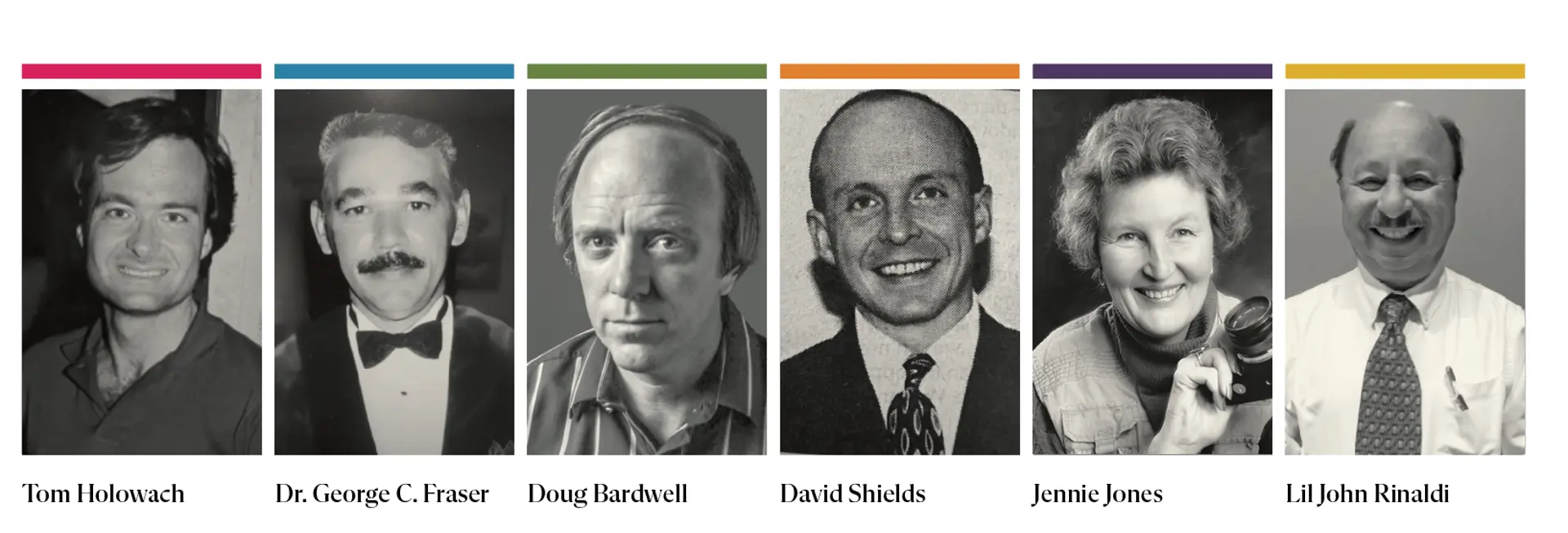
Dr. George C. Fraser (then director of communications for the United Way): The environment was still that Cleveland was “the mistake on the lake.”
Tom Holowach (operations director for Balloonfest and a Los Angeles native): When you told anyone about Cleveland, they’d say, “That’s where the river caught fire.”
Fraser: The United Way was still trying to expand its donor base, which at the time was almost entirely boomers. The entire board were chairmen and presidents of Fortune 500 companies. And they said, “We’re really looking to appeal to younger people. They don’t really know anything about the United Way.”
A month or two later, I’m on a flight, and there’s a Life magazine in the pouch of my seat. I took it out, and it was a double-page spread of Disneyland where they had done a balloon release. It got in the Guinness Book of World Records. A million balloons were released. It was an incredible photograph. That was the seed.
I started thinking about it and ran it past Cheryle Wills, who was the United Way chairman. I said it might come off kind of crazy, but what do you notice when you look at the picture? She said, “There’s a lot of young people.” I said, “I think we can do better than a million.” It was my pitch to attract young people to an extraordinary event. It would imprint on their minds forever. She said it was a great idea, and said, “Do you know anything about it?” And I said I knew absolutely nothing. But I found the guy who did it. He said, “You have no idea what it takes to release a million balloons. Breaking the record would be impossible.”
The guy who did it was Treb Heining, who started as a balloon vendor at Disneyland in his native California. He created the mouse-ear balloons available for sale even today at Disney parks and invented the balloon arch. He created balloon sculptures for movie premieres and organized balloon releases at the 1984 Olympics in Los Angeles, and the record-setting release at Disneyland in 1985, for the park’s 30th anniversary.
Fraser: I asked him to visit the site, and if you still think it’s impossible, tell me and I’ll bury the idea.
He said, “Where are you thinking of doing this?” I said, “The center of Cleveland, a place called Public Square.” He looked up and saw the buildings and the Terminal Tower and the space and said, “Can I be honest?” I said, “That’s why you’re here.” He said, “This is perfect.”
That was hurdle one. Hurdle two was presenting it to the board. Jim Stover, the chairman of the board of Eaton, was the chairman, and he said the same thing: It’s impossible. I said, “When we bring people together, we can do the impossible.” You could hear a rat pissing on cotton in Georgia when I said that.
In Heining’s previous balloon releases, he’d worked with Tom Holowach, who wanted to be a TV weatherman but found his calling in audiovisual production.
Holowach: Treb would say, “I could parachute Tom into any city, and within 24 hours, he’ll know more about it than people who live there.” I ended up moving there for a month.
It’s not about balloons. It’s about logistics. We were creating a temporary factory to inflate balloons that had to hold 3,000 employees for eight hours. We had to fill their food, bathroom and water needs. And then when we were done, we had to take it down and go away. I was planning a military invasion of Cleveland.
Fraser: They’d have to build a bin, about four stories high, with piping and netting, and set up a plumbing system where 1,000 people could blow up balloons simultaneously.
Holowach: I had a weird list of things to acquire that I’d learned from Disney. Each bin had half-inch copper tubing and inflation valves. They were set up in a grid, but I discovered the best thing to attach the valves to was a milk crate. I had to go looking for a dairy that would let us borrow a few hundred milk crates.
When we built the bin, they looked at me and said, “How do we keep the balloons in?” I said, “A net.” And they said, “What kind of net?” I said, “There’s one company that I know of that has any experience creating this kind of net, and that’s whoever fabricated the cargo nets for the space shuttle.”
So I found the guys; they were in Arcadia (California) and they said, “Can I come over?” It was a Quonset hut with a bunch of guys who made nets. They took my diagram and said, “This is really good.” And they built us a net that could take up a whole city block.

Doug Bardwell (construction manager for Terminal Tower for Forest City, then its owner): I thought it was a great thing for a number of reasons. I did a lot of volunteer work for United Way at the time and now I do a lot of work for the Red Cross. I think it’s great to get kids involved with volunteering at an early age that will be cultivated later on. I knew it would be great for our company, too. We had a lot of retail, and we wanted to see people come Downtown to see it.
I was looking out the window one day and saw the scaffold being built, and I got a call from our CEO, who had gotten a call from the United Way in a panic. They had forgotten to get a permit. Because I was on-site, I got the call. “Get over to City Hall and get a permit so they don’t have to stop construction.”
The appeals board was meeting that afternoon, and they said they could squeeze us in. Luckily, I had a good rapport with them. I’d been a construction manager Downtown for quite a while. I walked in, and they said, “Are you here for the project that’s half-done on Public Square?”
Holowach: We had to make sure we followed the rules set by the city, which weren’t onerous, but their job was to keep buildings from falling over and killing people, and they forced us to comply with city building code. You have to calculate how to support those walls so they’ll stand up to 90 mph winds.
Forest City knew this older guy who’d worked for the city for a while. I said, “What do we do?” and he just looked at the plans and shook his head. “You have to build a bridge truss.” We had bridge trusses going up and down and sideways.
Bardwell: Most plan reviews, they’re worried about a building falling over. They weren’t worried about a building taking off and going into space. It was a complete opposite concern. They added some ballast, but they went ahead and approved it.
Fraser: Jim Stover said, “How are we going to do this?” We were almost a year out. I said, “We’re going to get students from every school district, 1,100 to 1,500 kids. We’ll have a raffle. They’ll sell tickets from the raffle for a dollar. For each balloon, they put a ticket with a name and address on it. When they get up 25,000 or 30,000 feet, they enter the jet stream, and they’ll go anywhere. Someone can see the balloon and find out it’s from someone in Parma.” We raised somewhere around $300,000 just in raffle tickets.
Holowach: We used a lot of band kids. They were great because they were very diligent about their work and knew how to take direction.

David Shields (then the director of Greek Life at Case Western Reserve University): This was my first job out of grad school, and I’d actually started that year.
At the time, our dean of students was involved in the United Way, and they’d reached out to the university for students’ help to blow up balloons. It was directed to me because I oversaw the largest student group in the college. There were 20 fraternities and sororities, so there would be about 100 kids who could help, if we got everyone.
Holowach: The hardest part was the timing. The United Way had typically done their fundraising event right after school got back into session.
We couldn’t get enough kids out selling fast enough to make their nut. It was all really well planned, but we got to a certain point where they were concerned. Treb said, “We don’t have to do 2 million balloons.” We adjusted to 1.5 million, which was still a record.
Finally, it was the day before the event. The bin was built. Plans were made. The weather … started to look uncooperative.
Holowach: We had to close streets. We were rerouting buses. We created an additional train schedule. Estimates at that point were starting to sound like Woodstock. We could have 100,000 people here. We could have 200,000 people here.
We had a big meeting with everyone from the city, police department, fire department, transit. It was like a wedding: Anyone who wants to object, speak now or forever hold your peace. And they signed off on it.
There was a guy there who still had his crew cut, and he said, “You know, this is a little like the preparations for D-Day.” I got a little high off that. From then on, we felt like we had everything covered.
Fraser: We researched the weather on that day in September, but you can’t control the weather.
Holowach: The weather was our antagonist. We had done everything right, and Mother Nature was going to do what Mother Nature did, and there was no plan B. If you’re doing something outdoors, you do it, or you call it off.
The night before, we went to Stouffer’s for dinner, and all of a sudden, the wind started to blow. It came up out of nowhere, and we were outside saying, “What the hell is going on?” The thing that was really scary was there was a newspaper coin box on the corner, and it stood up on one leg and started to spin like a top. I said, “Everyone get inside now,” and we just sat there and listened to a freight train go by. It sounded like a tornado. It was done in a matter of five to 10 minutes. They said at the airport that they didn’t have any instruments Downtown, but some of the anemometers broke, so we think the gusts were around 90 mph. And I said, “You mean the city told me I had to build it to withstand 90 mph winds, and it actually did?”
Organizers feared the event might have to be canceled. Holowach and his crew had to stitch holes in the net overnight and had to call the fire department for a snorkel truck, which had a long, articulating boom, to reach the top of the net. The students who were helping with the balloon launch arrived around 3 a.m. Some people who wanted to watch arrived not long after dawn.
Shields: We started early, early, early in the morning. They wanted us there by 7 o’clock. I got tape around my fingers so I wouldn’t get blisters from tying balloons. It was a great festive atmosphere. They had music, and there were people talking to you. They tried to make it fun.
Jennie Jones (photographer hired by United Way for the day): They had kids blowing up balloons. They had nuns blowing up balloons. Everyone was blowing up balloons. It was really fun. The place was crowded — cramped, even — with people. It was hard to move around, but it made for good pictures.
We all met down there at 8 o’clock and talked about where we were going to put our people. It really was an all-day thing. I had eight people, and I had them stationed each where they needed to be, and I was in the helicopter. We had specific views that we wanted. We had people on the ground; there were people on building tops.

Holowach: People started showing up at 7 or 8 in the morning to try to get the best view. I lived in Pasadena (California), and it was like watching people camp out for the Rose Parade.
They were excited. The kids were thrilled. It was a carnival atmosphere. We had Big Chuck and Lil’ John!
Lil John Rinaldi: We did our show, Couch Potato Theater, from there. We got there maybe a half-hour before the show started, probably about 10:30-11 a.m. By the time we got there, most of the balloons were already inflated. We planned to do three or four segments and end with the balloons going off. We were excited to be a part of it.
Fraser: It was a wonderful, beautiful early autumn day. The sun was shining. Public Square was packed. Cars were backed up coming into Cleveland. People were gawking.
But the weather was about to turn. A humid day with a mix of clouds and sun was predicted for Northeast Ohio. However, a cold front was moving in — and that could be a problem.
Holowach: Whenever we did an event, I would call the weather department and find the meteorologist on duty. That was really important ultimately when we went to Cleveland. The guy watching Doppler said, “The front is coming. What you have to worry about is the squall line in front of the cold front.” The weight of the water on the balloons is what we were worried about. It doesn’t take a lot to weigh down a helium balloon.
Fraser: I was told that if there’s even one drop of water on a helium balloon, they don’t go up. They go down.
Holowach: I called NOAA (National Oceanic and Atmospheric Administration), and they said, “You’re going to get rain, and it’s going to hit you sometime between 1:30 and 2 p.m.” So we huddled and realized we’d have to go early. I think we did the countdown at 1:45 p.m.
The net lifted up, and slowly but surely, this multicolored amoeba emerged and wrapped itself around the Terminal Tower.

Shields: It was absolutely spectacular. You spend all these hours tying the balloons and then you watch them release. The balloons stayed clustered together. It was like a giant amoeba as they released, and then the way they wrapped around the Terminal Tower was really cool as well.
Sometimes you work hard, and something happens, and you go, “Wow, that was anticlimactic.” But this was all we’d hoped.
Fraser: NBC actually broke into a college football game to cover the release. Maybe five or seven minutes, but it was national. The way the balloons came out was almost like a mushroom cloud.
Holowach: The balloons spread out, and for a brief moment, it looked like a big stained-glass ceiling.
Then the storm blew in.
Holowach: We had a temperature inversion, and the balloons just got to a certain point and stopped going up. And then the rain came and weighed the balloons down. That’s when they started to swirl down and cover the lake and the runway at Burke Lakefront. Burke Lakefront was closed for the event.
Jones: The wind changed. The balloons were going out to the lake, and we had to fly through it. That was a little frightening for all of us. None of us said anything to each other on the helicopter, but we knew what we all were thinking. We were legitimately worried we wouldn’t make it. We got through it, and we landed at Burke to turn everything over to the press. They didn’t even stop the helicopter. They just opened the door, and we jumped out. They said we were down, and people thought we’d crashed.
Shields: I was driving home, and I could see balloons in the lake and floating around the area and thinking, Wow, that might be a problem. There was some negativeness around it, and that kind of sucked some of the fun out of it.
The negativity continued. In Balloonfest’s immediate aftermath, some letter writers to The Plain Dealer called it wasteful and accusded it of polluting Lake Erie. For the 25th anniversary of the event, The Plain Dealer wrote a story that appraised Balloonfest as a cool idea, but detailed a litany of bad events afterward, including a multi-car wreck on the Shoreway, the hindering of a search for two missing anglers (who had turned out to have died when their boat capsized), and the spooking of horses at a Medina farm, precipitating a lawsuit.
(Ironically, this has led to another reappraisal led by cleveland.com this may have been hyperbole.) In 2018, The Atlantic released a short video calling it a “Balloon Disaster.”
Holowach: It basically fell into the clickbait trap.
Fraser: It was the immediate post-
experience that was disappointing. We opened up The Plain Dealer and saw those thousands of balloons on Lake Erie.
For several years, it was a lowlight of my life. Now it’s a highlight. Time heals all wounds. The negative dissipates, and you think of the good.
Rinaldi: It was a great day for Cleveland. There were thousands of people down there, from throughout the city and county. Kids came together, adults came together, and we were all having a good time.
Shields: It was an amazing thing. I had never seen that many balloons released at one time. That moment of exhilaration and fun and happiness hasn’t gone away, and it’s been 40 years.
Fraser: I still run into people who want to talk about Balloonfest and where they were.
Holowach: The underlying lesson of Balloonfest is that you don’t do something like that alone. You don’t even do it with a small group. It’s cooperation. It’s the willingness of strangers to work with other strangers for a common goal. And we’ve got to remember that.
For more updates about Cleveland, sign up for our Cleveland Magazine Daily newsletter, delivered to your inbox six times a week.
Cleveland Magazine is also available in print, featuring immersive stories, helpful guides and beautiful photography and design.

Vince Guerrieri
Vince Guerrieri is a sportswriter who's gone straight. He's written for Cleveland Magazine since 2014, and his work has also appeared in publications, including Popular Mechanics, POLITICO, Smithsonian, CityLab and Defector. He is also the author of three books, the most recent being Weird Moments in Cleveland Sports.
Trending
-
1
-
2
-
3
-
4
-
5