
Franz’s Finale: The Cleveland Orchestra’s Longest-Serving Music Director Begins His Farewell Season
After a record-setting 25-year run in the role, The Cleveland Orchestra’s music director takes his final bow at the end of this season.
by Annie Nickoloff | Sep. 14, 2026 | 5:00 AM

Photographed by Ken Blaze
It all starts in silence. The orchestra is at attention. Focused on the musicians, with his back to the audience, Franz Welser-Möst’s arms are raised.
The quiet stretches before the piece begins. The September opening show of the 2025-26 season brings The Cleveland Orchestra conductor back to Severance Music Center: a notable homecoming, following the previous two seasons flecked with missed performances and hurried substitutions, as Welser-Möst underwent treatment for a cancerous tumor in his bladder.
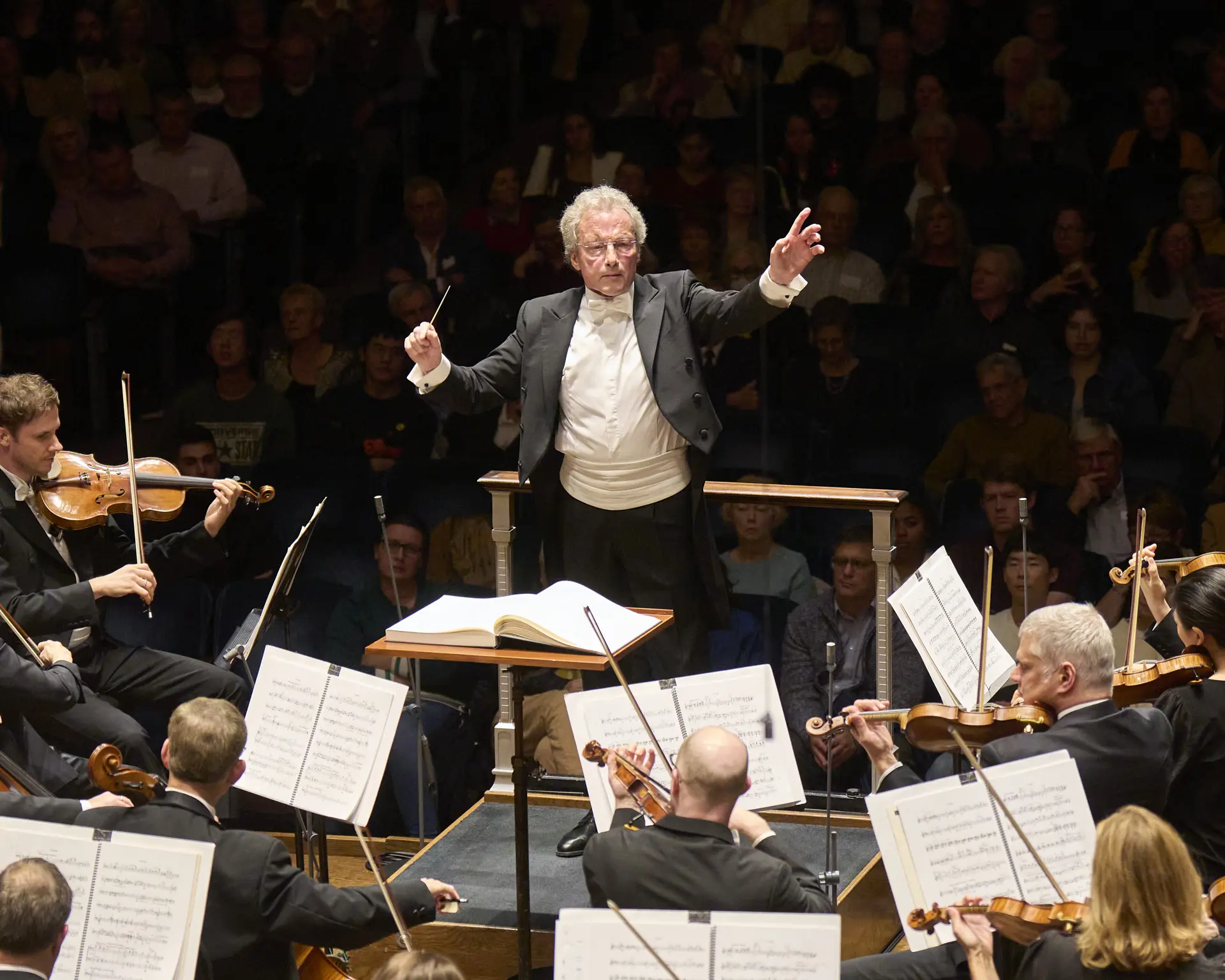
He’s doing better now, he says; he’s cancer-free. His wavy white hair pushed away from his forehead, the 65-year-old wears a black tuxedo with a shiny white cummerbund, looking fit and engaged. He holds the room’s attention in the quiet just before the latter half of the program.
And then: the tiniest flick of the baton.
Barely there, a snare’s militaristic taps strike Mandel Concert Hall with one of classical music’s most recognizable rhythms.
Welser-Möst sways gently at the podium, arms moving in subtle swishes, directing Maurice Ravel’s “Bolero.” The piece swells as flute, clarinet, bassoon, oboe, trumpet and jazzy saxophone and trombone players all join in, one after another. Musicians in synchrony, moving as one collective body.
“So often what’s on the page is not how you play it,” Welser-Möst shared, his Austrian accent clear, ahead of the concert in a Q&A with Orchestra CEO André Gremillet. “The melody has to be free.”
Welser-Möst pulls forward “Bolero’s” growing intensity. Every member of the orchestra soon plays the jabbing rhythm in one steady crescendo. The maestro jabs along, baton sweeping the air in arcs, as the piece unleashes its characteristic fortissimo explosion. Then the room goes quiet again.
A beat. The audience erupts, bolting from their seats in a standing ovation. High school and college students in the nosebleeds, young couples on dates on the orchestra level, patrons in suits and upscale dresses in the box seats — all together, they stand to cheer for the conductor’s big return home.
Welser-Möst has one more season-opening concert as The Cleveland Orchestra’s music director. On Sept. 17, his 25th and final season in the role commences with a performance featuring Strauss and Shostakovich, ushering in a series of programs that celebrate, simply, all things Franz.
When he exits his full-time role with the century-old orchestra in May, Welser-Möst will have held the leadership position longer than any of the previous six Cleveland Orchestra music directors, including great, big, institution-building names like George Szell, Nikolai Sokoloff and Christoph von Dohnányi. In his 25-year tenure, he’s appointed dozens of world-class musicians, expanded the group’s repertoire with adventurous premieres and commissions, and developed one of the youngest classical music audiences in the country.
Now that he’s healthy, the final season serves as one long goodbye, capping a career that maintained Cleveland’s unexpected standing as home to one of the very finest musical groups on the planet.
Welser-Möst’s final season, like many, will begin with silence — and end in an ovation.
*****
A “vacuum of sound”: Franz Welser-Möst remembers one instance of silence that changed his life forever. His autobiography, From Silence: Finding Calm in a Dissonant World, details, with flashbulb clarity, a deadly car accident when Welser-Möst was an 18-year-old violinist with dreams of performing in the Vienna Philharmonic.
On the icy roads of the Austrian Alps, his friend driving the car lost control. But Welser-Möst doesn’t remember a clanging, noisy wreck: instead, a suspended noiselessness.
The car accident killed his friend’s mother, who was also in the vehicle, and led to serious injuries for Welser-Möst, including nerve damage to two of his fingers. The event ended his violin dreams.
“At 18 years old I had encountered death,” he wrote about the incident, “and this changed my life as has no experience before or since.”
Pivoting to conducting, Welser-Möst continued his studies under composer Balduin Sulzer in his hometown of Linz, Austria, then worked with manager Andreas von Bennigsen, a relationship that, Welser-Möst says in his book, led to a “weak adoption” by Bennigsen, before the two went separate ways. The young conductor later married Bennigsen’s ex-wife, Angelika; they remain married today.
He worked his way into Europe’s classical scene, holding conductor or music director positions with organizations in Sweden, Switzerland, the U.K. and Austria, to mixed reviews. He made his U.S. debut in St. Louis in 1989, and his Cleveland debut in February 1993. Nearly a decade later, after Christoph von Dohnányi departed The Cleveland Orchestra in 2002, Welser-Möst became the organization’s next music director.
Welser-Möst entered the role with ideas on programming, and also an energy shift.
“When I was interviewed for the job, I remember they asked me, ‘So what do you think about The Cleveland Orchestra?’” he remembers. “And I said, ‘It’s a perfectly well-oiled machine. But it’s lacking something.’ And they were a little taken aback by that. They said, ‘What?’ and I said, ‘Warmth.’”
The transition between Dohnányi and Welser-Möst went smoothly for members of the orchestra, in assistant principal violist Stanley Konopka’s experience.
“They had a similar tradition, and so there wasn’t this big leap into another philosophy of music, or philosophy of the standard repertoire,” Konopka says. “I think Franz brought us to another level with faithfulness in interpretation.”
The Cleveland Orchestra has been a mainstay in Konopka’s life since he first worked as an usher at Severance Music Center while studying at the Cleveland Institute of Music decades ago. Today, he continues to work in what he calls a “pressure job” — one that demands, on one side, meticulous attention to detail and, on the other, emotional expression rooted in the stories behind each score.
“As brilliant as Franz is,” he adds, “there’s always, at least for me, a sense that we needed to give space for the real genius in the room, which was the composer.”
*****
Sitting in his office inside Severance Music Center, Welser-Möst leans back in a chair, legs crossed, relaxed. These days, the music director is comfortable in Cleveland. While working in town, he lives in a cozy Moreland Courts condo near Shaker Square; in 2024, he earned $1,713,698 for his work with The Cleveland Orchestra, according to the organization’s nonprofit tax returns.
Yet, his critical legacy is mixed.
“I’ve received so many bad reviews in my life,” he says, unbothered, “and I’m still here.”
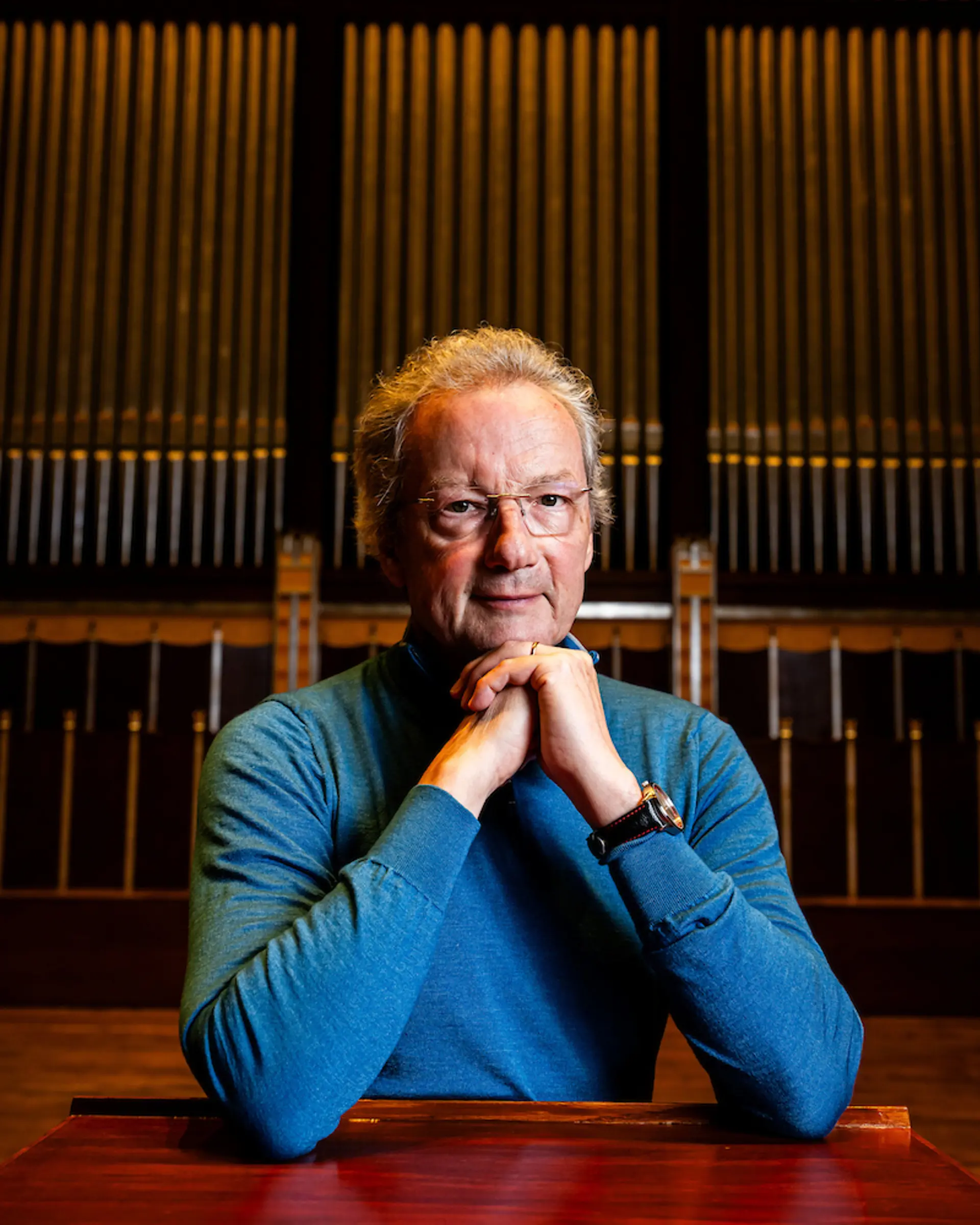
Before the stardom and success, Welser-Möst was the subject of critiques that made him reconsider a future in music. His star rose in Europe when he was a young conductor, but his early successes were marred by a poorly received six-year stint leading the London Philharmonic Orchestra in the ’90s, where he earned a biting nickname: “Frankly Worse Than Most.”
Plagued by what he says were problems rooted in organizational restructuring, economic issues and opposing visions, Welser-Möst wrote in his autobiography that his time in London was “a six-year odyssey of misunderstandings, insults, intrigues and catastrophes, a resounding failure.”
Not long after, in his new home of Cleveland, Welser-Möst found a fan base while facing fresh critics. In a review of the conductor’s first season leading the orchestra, The Plain Dealer’s then-classical music critic Donald Rosenberg remarked upon Welser-Möst’s “generally pale music making.”
Rosenberg continued to be critical of Welser-Möst’s work, and he wasn’t alone. Russell Platt, the former classical music editor at The New Yorker, gave mixed reviews to the music director, praising his opera accomplishments while saying his orchestral work could be “a major disappointment.”
A divide widened between the critical fans and foes of Franz.
In 2008, Rosenberg was removed from his beat at The Plain Dealer and reassigned to general arts coverage. He sued the newspaper and The Cleveland Orchestra for defamation. A jury ultimately ruled in favor of the orchestra and newspaper. The case put a spotlight on the city and prompted global debates about free speech in review writing.
Other critics have praised Welser-Möst’s approach, particularly in recent years. The New York Times writer David Allen documented the rehearsal-to-performance process in an early 2026 feature, showcasing the orchestra’s preparation and execution of Mozart’s “Jupiter” Symphony and Shostakovich’s Symphony No. 11. Allen noted the conductor’s culture of respect and “forensic precision” in his familiarity with the score, and said the group was “all but an ideal orchestra” and “one of the finest in America.”
The Cleveland Arts Prize honored Welser-Möst in 2021 with a special citation prize, and he earned the Kennedy Center’s Gold Medal in the Arts in 2019. He was named an honorary member of the Vienna Philharmonic in 2024.
Awards, critiques, hate and praise, Welser-Möst says, are all simply tests of life — a way to keep your priorities in order.
“Does a good review mean that you have been as good as that person writes about you?” he asks. “I can honestly say that there hasn’t been, in my life, not one rehearsal or a performance, where I would walk out and not question what I’ve been doing, because that’s the only way you make progress. You constantly have to question if it was good enough, what you did.”
*****
Three years of living and working in Cleveland culminated in Allison Loggins-Hull’s original composition “Grit. Grace. Glory.”
The orchestra’s former Daniel R. Lewis composer-in-residence wrote the piece specifically for the city. It opens with a train-like, chugging passage called “Steel,” then builds into the contemplative second section, “Shoreline Shadows,” made with material created in workshops with Cleveland School of the Arts students. The third section, “Quip,” is playful, honoring the city’s humble-brag sense of humor, and the final section, “Ode,” ties everything together with a hammering, rock ‘n’ roll-tinged rhythm.
While refining the project, Loggins-Hull remembers stepping in for the group’s first rehearsal of the piece, which premiered with the orchestra in May 2025.
“It’s astounding, because it doesn’t feel like a first rehearsal; it feels like a fourth rehearsal,” she says. “It’s just really stunning how prepared this orchestra is.”
The brand-new piece joined a long list of premieres and commissions from the orchestra, many of which were led by Welser-Möst. It started in 2002 with his first commission, Kaija Saariaho’s “Orion,” which premiered in Cleveland before being performed by groups worldwide.
“Every major orchestra played it,” Welser-Möst remembers. “We sort of made history with that piece. Not everything you commission will be that kind of success, but you have to give it a try.”
Not every music director sees new works in the same light.
“Szell used to say, ‘Contemporary music is temporary music,’” Konopka says. “But Franz always took a modern piece, especially a premiere, very seriously. He took everything seriously, but he took that seriously.”
Even well-loved Beethoven, Haydn and Mozart works got new life under Welser-Möst’s direction, says Konopka.
“Pieces that we had played repeatedly, standard repertoire; we had toured with them, we’d recorded them, maybe more than once — he brought to light things that we had never seen before, and that was not a one-time experience. That was something that happened every time,” Konopka says. “With Franz, it was always fresh.”
RELATED: After Seven Grammy Wins, Cleveland’s Elaine Martone Reflects on Music Success
It’s not just the composer and the conductor who get the credit at Severance. Earlier this year, Elaine Martone’s shiny dress sparkled in the stage lights as she strode onstage to accept her seventh Grammy. The Clevelander earned the award for classical producer of the year for her portfolio that included the orchestra’s Berlioz, Julius Eastman, Tchaikovsky and Mozart recordings, among other projects. She thanked Welser-Möst in her speech.
“I love working with Franz Welser-Möst very much,” she previously told Cleveland Magazine. “With Franz and the orchestra, I feel like I get to be another contributor, if not musician, in that great group.”
*****
Franz Welser-Möst explains that it won’t be possible to pose with a baton for a Cleveland Magazine photo shoot. There’s something inauthentic, he says, about holding the item like a prop without the orchestra and without the energy of music to guide the moment.
“It’s not the hand movements,” he explains. “It’s the fire in the eyes.”
We are standing in sacred space here on the Mandel Concert Hall stage. Perhaps because of that, he’s a little uncomfortable with being photographed. He asks everyone to leave the area except for photographer Ken Blaze.
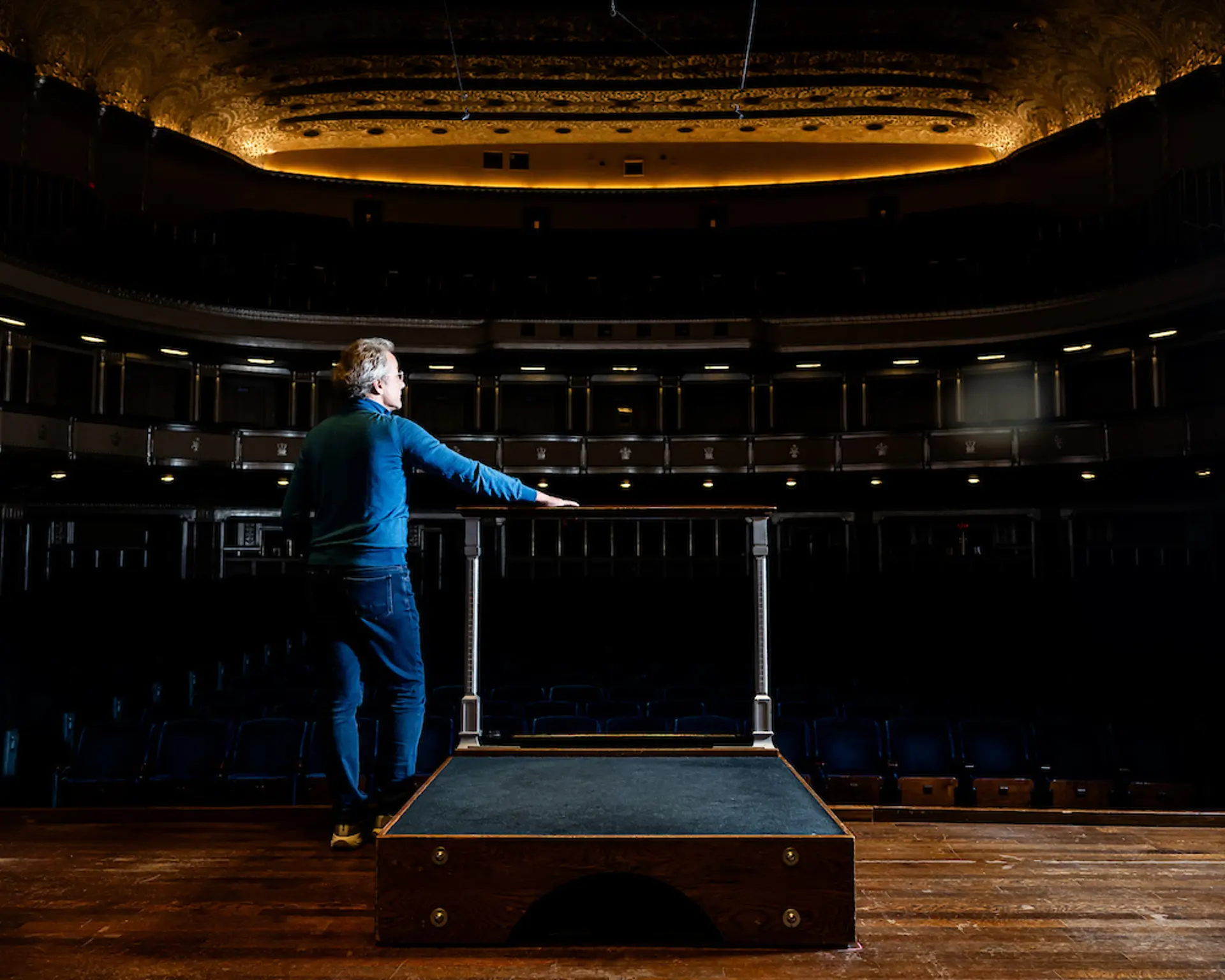
Afterward, wearing a bright yellow “Fidelio” baseball cap, Welser-Möst is energetic when sharing details about the 2025-26 season finale, the centerpiece of the fourth edition of the Mandel Opera & Humanities Festival. And he’s already buzzing about the 2027 festival’s fully staged performance of Richard Strauss’ notoriously challenging “Die Frau ohne Schatten.”
He fans his arms out, explaining how far the stage will need to extend, detailing logistical challenges required to create space for the ambitious staged production. The Strauss opera will be the climax of the conductor’s farewell season.
“One of the many things that Franz really brought to this orchestra is a consistent opera performance,” says The Cleveland Orchestra CEO André Gremillet, “which was so impressive.”
Beyond the Strauss piece, the next season includes classics by Mahler, Stravinsky, Liszt and Beethoven, coupled with new commissions and premieres. Alongside Cleveland shows, the orchestra returns for its annual Miami residency and a two-day run at Carnegie Hall, plus a tour of Europe in the fall.
But before the excitement of the 2026-27 season ramps up, Welser-Möst first completes the 2025-26 season with “Fidelio,” Beethoven’s only opera.
A few weeks after the photo shoot, he appears on the Mandel Concert Hall stage, directing both the orchestra and the singers, who are stationed on a lofted platform. Above them, a screen scrolls English translations of the German opera to the audience, and periodically, Karamu House president and CEO Tony Sias shares bits of narration to keep the story moving along — a story of political resistance, determination and love.
The opera ends on a jubilant note. Welser-Möst steps off the stage before reappearing with the singers on the raised platform, all smiles. Holding hands, the group takes several bows, facing a standing ovation.
It’s triumphant, the story and the performance, woven together — wrapping this second-to-last season for the conductor.
*****
Opera on a Thursday. Bruce Springsteen at Rocket Arena on a Friday. Fran and Jules Belkin, the ultimate Cleveland rock ‘n’ roll couple, celebrated Fran’s 86th birthday in two musical worlds this year.
The two stepped backstage at Severance to congratulate their close friend Welser-Möst on another successful Cleveland performance of “Fidelio” in May.
“After two and a half hours, can you imagine him having his arms up?” Fran says. “But he grabbed us and hugged us and kissed us. He was so happy with the way everything turned out.”
If Welser-Möst is among Cleveland’s classical royalty, Fran and Jules Belkin are Cleveland’s rock king and queen.
Belkin Productions, the concert promotion company that Jules and his brother Mike established in the ’60s, brought stars like Springsteen, David Bowie, the Rolling Stones, Jimi Hendrix and more to town for iconic performances. The Belkins were also major players in the opening of the Rock & Roll Hall of Fame.
An unlikely friend group formed, thanks to mutual connections. Retired University Hospitals heart surgeon Alan Markowitz and his wife, Cathy Pollard, introduced Fran and Jules Belkin to Franz and Geli Welser-Möst. The three couples have been inseparable friends for the past two decades.
“There’s a real juxtaposition. Here we are in the rock ‘n’ roll world, and he’s in classical music. Never the two would meet,” Jules says, “but we just have a good time talking about each other’s experiences.”
Though Jules grew up seeing the Metropolitan Opera’s performances at Public Hall with his mother and played the violin as a kid, he didn’t spend much time with classical music as an adult. It wasn’t until they sold Belkin Productions in 2001 that Fran and Jules, with their suddenly free evenings, got more involved with Cleveland’s classical side. Through that, they’ve deepened their friendship with the Welser-Mösts.
“Jules and Fran Belkin are amongst our best friends,” Welser-Möst says. “It’s so typical for Cleveland, that it doesn’t matter where people come from, from which professional area. We found people here extremely warmhearted and generous.”
When not onstage, Welser-Möst spends his time in Cleveland getting to know the city, often with his friends. He hikes many of the Cleveland Metroparks trails, peruses the North Union Farmers Market at Shaker Square, explores the Cleveland Museum of Art and picks up bobbleheads at Cavs games — wearing some extra sonic protection inside the loud arena.
“They’re, for my ears, too noisy,” he says, with a laugh. “I wear earplugs and noise-canceling headphones when I go there.”
The Belkins added to his Cavs bobbles with a custom bobblehead for the conductor, complete with his glasses, baton and tuxedo, for his 50th birthday. They traveled to Austria for Welser-Möst’s party with the personalized gift in tow.
“Bobbleheads were just becoming popular,” Fran says. “But the bobblehead is not known in Europe; that’s an American phenomenon, so when we sent some to his friends, they had no idea. They were thinking that we were making fun of him.”
This year, for Fran’s birthday weekend, after the Belkins celebrated with The Cleveland Orchestra and Springsteen, Welser-Möst had another surprise for her when she came over for coffee with the ladies of the friend group. A row of sticky notes dotted his home’s hallway wall, from the front door all the way into the kitchen, with “Fran” and a drawing of a heart on each one.
“I’ve never had anybody do anything so lovely, and this is right in the middle of his opera, and he was busy,” she says. “But that’s how he is. He’s just so sweet and special.”
The Belkins have come to understand Welser-Möst’s two sides — his joke-making, fun-loving, adventurous self, and his serious composure when he holds a baton onstage.
“His personality in public is so much different from what he is when he’s in a close, small group. It changes,” Jules says. “He has that kind of look that says, ‘Don’t mess with me.’ That’s his business. So he wants to be very, very serious about his business.”
*****
Doctors discovered Welser-Möst’s cancerous tumor in 2023. Immunotherapy and four surgeries interrupted the front half of the 2023-24 season, but Welser-Möst returned to the Severance podium in January to continue his work with The Cleveland Orchestra.
“The doctor said, ‘You need to work. Don’t sit at home and get depressed. That’s not good,’” Welser-Möst says. “So I did as much as I could.”
In the middle of the 2023-24 season, he announced that he would not renew his contract with The Cleveland Orchestra, set to expire in 2027.
Then, the following season, he took another leave in the fall due to unexpected side effects that caused attacks of pain. He landed in the emergency room 11 times: 10 in Austria and one at University Hospitals. Again, he returned to Cleveland for performances in the second half of the season and led the group on its trip to Carnegie Hall in March.
In the 2025-26 season, he missed none of his shows at Severance Music Center, but in the middle of a concert during the orchestra’s annual Miami residency in January, the conductor experienced a moment of hypertension, reported South Florida Classical Review. Halfway through the piece, he sat down with his head in his hands, drank a bottle of water and, minutes later, resumed the performance.
A few months later, he’s candid about his recent medical events, speaking from his Severance office.
“I am fortunately in the business where you plan three, four or five years in advance. And then you cancel,” he says. “And you get all that gossip and whatnot, and that’s why I said, ‘I want to be completely (transparent). I have nothing to hide.’
“Now I’m fine,” he adds, with a small smile, “so it’s all good.”
Next year, a different music director will take the reins. The Cleveland Orchestra is tight-lipped about Welser-Möst’s successor; as of mid-August, the organization hasn’t made a final decision.
“We have the great privilege, but the great responsibility, of being the stewards for a while of this institution,” says Gremillet. “(Welser-Möst) leaves the orchestra in a better place than he found it, which is saying something, given how great The Cleveland Orchestra already was when he came here.”
*****
In his small office, a couple of hallway turns away from the grand stage of the Mandel Concert Hall, Welser-Möst has appointed 53 of the orchestra’s 99 current musicians — a meticulous process that sometimes takes multiple years to find the right person for each role.
“What might be the crowning achievement is his hiring,” Konopka says. “Statistically, he had discernment. He could read into the audition performances. I mean, pretty much everyone he’s hired has just been the highest quality human beings. I don’t know how you do that, but it changes everything when you have the right person in the role, and he’s been consistently successful.”
This is the part of the job that Welser-Möst calls the greatest: this moment, in his office, sometimes after multiple auditions, and a lifetime of musical studies and dedication to the craft — dedication he knows in his heart — where he gets to tell someone, often amid tears of joy, that they’ve made it.
That they’re a member of one of the greatest orchestras in the world.
“That is a happiness of mine,” he says, smiling, “which is extraordinary.”
Expect the extraordinary.
The phrase is on the cover of each program handed out before Welser-Möst’s concerts. Alongside the slogan is a photo of the maestro, holding his baton out, eyebrows raised, forehead furrowed.
These photos are snapped from peepholes backstage, sneakily capturing moments of intensity during live performances — of an artist in his element.
It’s often unseen, except to the musicians facing him. But here, you get a glimpse. Franz Welser-Möst has fire in his eyes.
For more updates about Cleveland, sign up for our Cleveland Magazine Daily newsletter, delivered to your inbox six times a week.
Cleveland Magazine is also available in print, featuring immersive stories, helpful guides and beautiful photography and design.

Annie Nickoloff
Annie Nickoloff is the senior editor of Cleveland Magazine. She has written for a variety of publications, including The Plain Dealer, Alternative Press Magazine, Belt Magazine, USA Today and Paste Magazine. She hosts a weekly indie radio show called Sunny Day on WRUW FM 91.1 Cleveland and enjoys frequenting Cleveland's music venues, hiking trails and pinball arcades.
Trending
-
1
-
2
-
3
-
4
-
5