The Creative Hangars Are Strengthing Small Business in Hingetown
The Hingetown Hangars have been the district’s elephant in the room for their unique appearance, a mystique that has persisted through a bout of turnover that their original landlord looks to halt this year.
by Julia Lombardo | Aug. 8, 2026 | 5:00 AM

Photographed by Casey Rearick
Even among chic restaurants, warehouse-revival apartments, rainbow crosswalks and swirly slides that jut out of parking garages, the Hingetown Creative Hangars are impossible to miss.
The cluster of seven silver U-shaped huts dominates a half-block on the corner of West 28th Street and Church Avenue in the Ohio City area, each two stories and standing 15 to 20 feet tall. With no flashy signage, the ultramodern structures are slightly unnerving but certainly beckoning. Passersby can’t really know what’s there unless they press their face to the glass windows and read between the lines of each interior’s wooden walls.
Despite being so recognizable, the hangars have struggled to find their groove since emerging in 2021. First constructed as housing, they launched to the public as City Goods, a strip of nearly three dozen small businesses. In 2024, that project went under after a series of missteps, but it left behind a blueprint of what a strong independent retail presence could bring to the neighborhood.
This summer, they’ve quietly relaunched as the Hingetown Creative Hangars. Local sellers deal a familiar beat of trinkets, books, art, clothing, food and drink across the seven structures. Each space reflects a more fine-tuned, curated group of entrepreneurs looking to make a mark on the distinctly innovative neighborhood.
It’s fun. It’s fresh. It nearly worked once before, and with a renewed buzz around the space, it might finally stick this time.
The hangars’ origin is rooted in Hingetown’s earliest days. Before calling Hingetown home, Graham Veysey would cruise past the district with an OH CITY license plate. The curious businessman was looking for a charismatic place to make a civic impact with homegrown commerce; settle with his wife, Marika Shioiri-Clark; and relocate his digital media consulting company, North Water Productions. The adventure started in a 5,000-square-foot room on the top floor of a firehouse on West 29th Street, which is now also home to Larder Delicatessen & Bakery and Rising Star Coffee Roasters.
“The firehouse had been vacant for a number of years,” Veysey recalls, “I said it was too far off the beaten path, but I walked in and fell in love with it.”
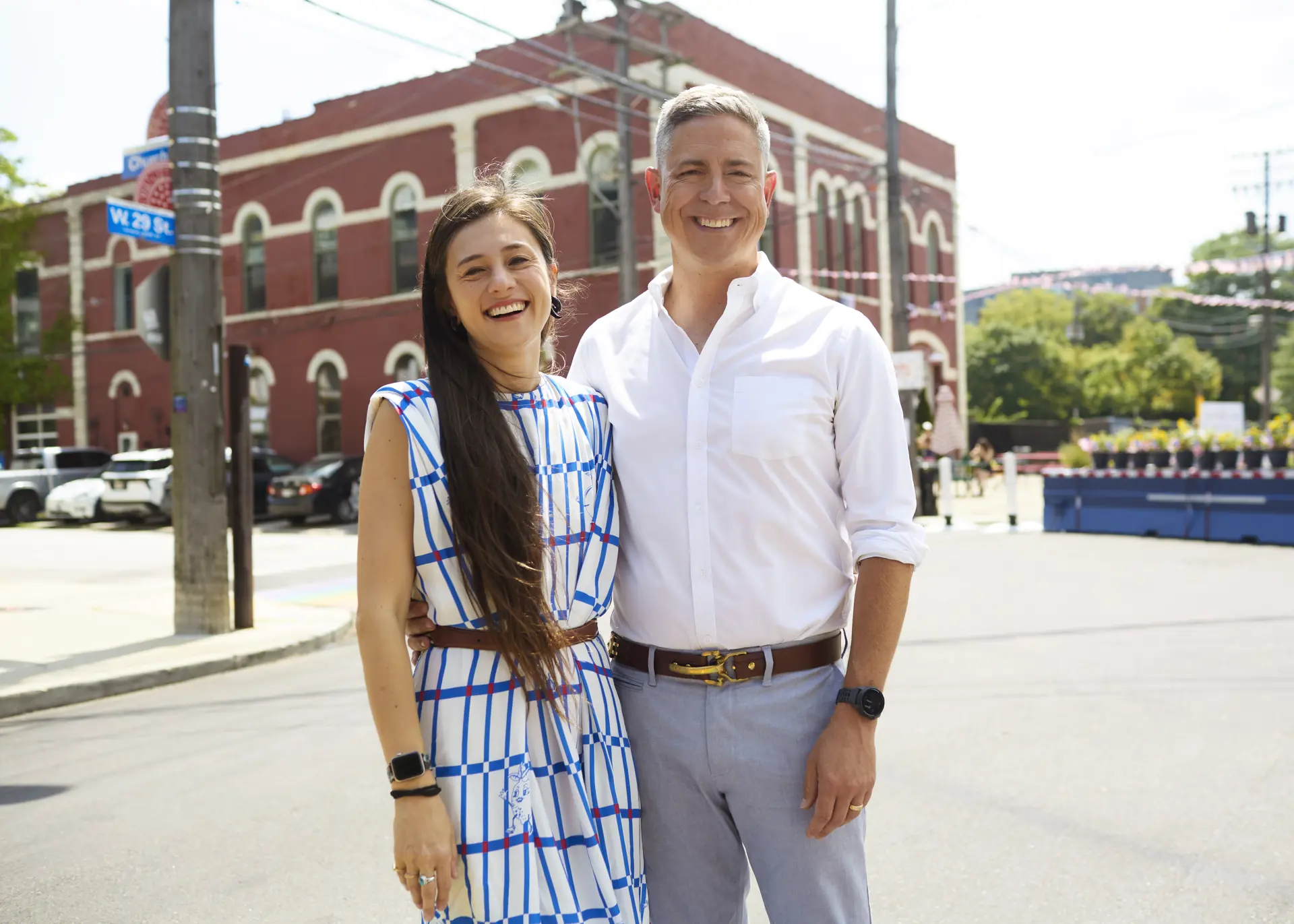
Over the next decade, a mass revival brought the path close to where he wanted it, reclaiming the bones of nearby historic spaces like the Striebinger Block and the Print Shop building. But shopping was still an underrepresented part of the picture, and across the street from the firehouse stood a canvas of opportunity.
Veysey originally wanted to build the hangars into cost-effective housing for artists, whose presence he felt would enliven the neighborhood. Instead, Sam Friedman, co-owner of Chagrin Valley Soap & Salve, intercepted with a retail-focused business model that would make the striking structures more publicly accessible. In 2022, Friedman’s proposal became City Goods, a market collective designed to lower the barrier of entry to a brick-and-mortar space for artists and makers. Brands like Ilthy streetwear, Ginger & Honey skincare and Brittany’s Record Shop, among many others, each made a piece of the seven structures their own.
“I wanted to provide infrastructure to small local makers,” Friedman says. “We could deal with everything from the internet, to sales tax and marketing. You can just make your great product.”
“I always imagined having an endeavor specifically designed to help the creative community come and find their own,” Veysey says. “We had always wanted the structures to be achievable for somebody.”
Despite a warm reception, City Goods started losing more money than it could gain. Friedman sold the collective to Ohio City Inc., which turned City Goods into a nonprofit organization for about a year. Unable to maintain the operation, the group terminated the original structure and surrendered the keys in early 2025, leaving the hangars vacant and open to individual tenants. Friedman condensed his shop into one hangar with hopes of keeping the business alive but manageable.
Now, the buildings face a newfound hope reemerging as the Hingetown Creative Hangars. Though word on the street started scant, the latest occupants are readying for their introduction, having opened concepts ranging from a bookstore, a fashion boutique, a vintage shop, a kids’ store, a crafting studio and an oyster bar. Among them, Friedman’s City Goods hangar kept its bearings but was rebranded as Forest City Vault, headed by the shop’s new owner, Samantha Basille. The longtime City Goods vendor known for her coffee roastery, Sappho and Her Beans, inherited the hangar’s lease from Friedman to give the market collective a fresh, new spirit.
“This gives people a permanent place to find you,” Basille says. “It gives you a place to call home, so when you’re out doing events, you’re able to say, ‘I may not be in this parking lot next week, but I am here five days a week.’”
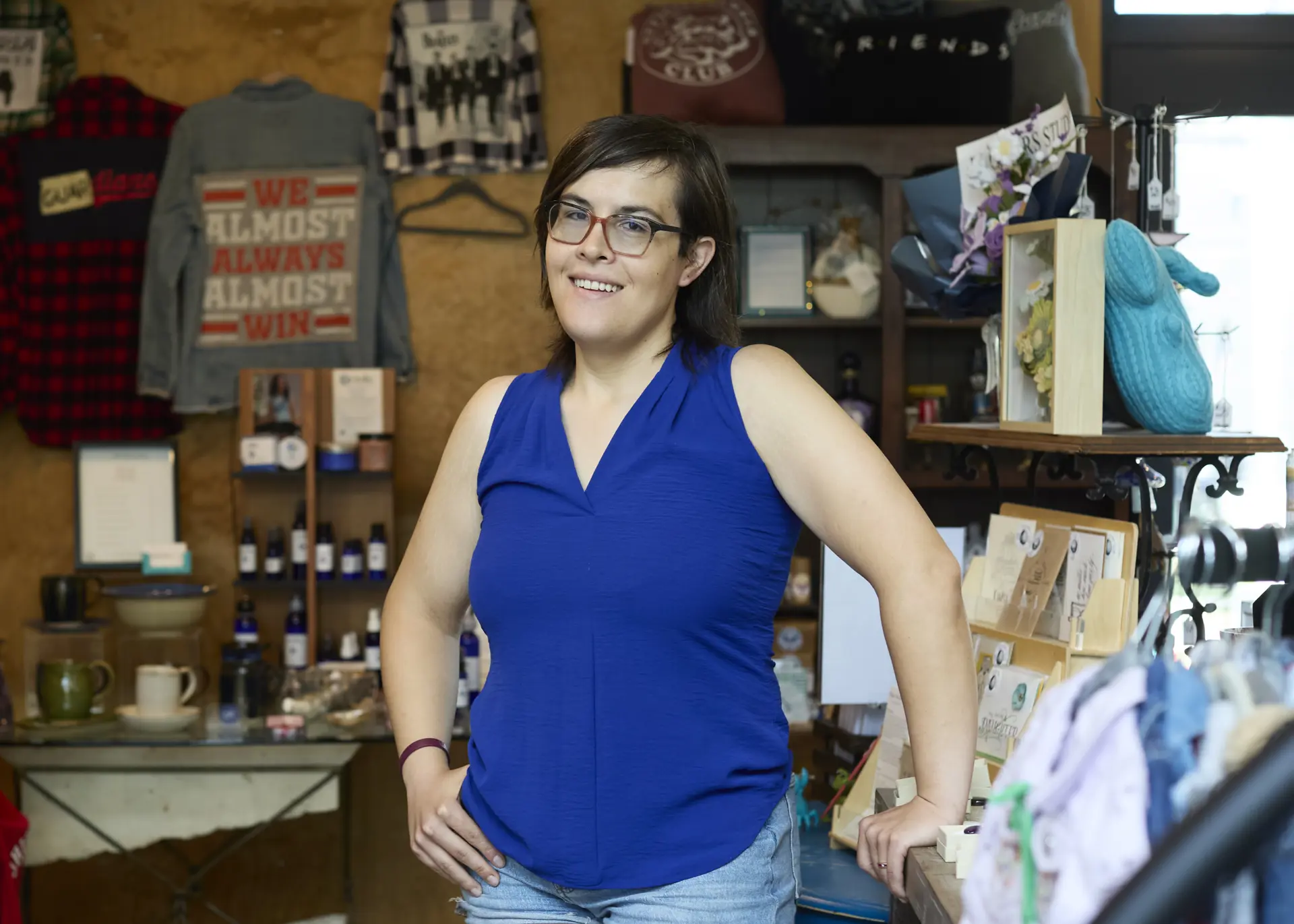
Compared to City Goods’ campus-wide setup, Forest City Vault maximizes every square inch of its sole interior to match that footprint, with brands like Hi Raya dessert syrups occupying a single refrigerator, or Fleur Forever’s crochet bouquets taking up a lone basket, situated between a conglomerate of tables divided among multiple makers each. As of July, Forest City Vault is home to about 110-120 vendors, which nears four times the capacity of what City Goods hosted across seven hangars.
“Samantha has run with more of a consignment model,” Friedman says, “which opened the door up for more small vendors, who don’t have the ability to pay any rent, to be able to keep their wares in there. It’s shifting with times and needs, which is what it should do. It’s great to see that this idea is strong, important and continuing onward.”
Hingetown will likely continue to grow with or without the Creative Hangars. Still, the dynamic spaces remain a symbol of a final step toward fully manifesting the thriving urban neighborhood that Veysey and Shioiri-Clark set out to build 15 years ago.
“The people who are stewards of the hangars are each bringing their personalities,” Veysey says. “Having seven different structures that have seven real creative entities makes it a draw for people not only in Cleveland, but regionally and beyond. I think that this is a chapter in a long history for this part of the city.”
For more updates about Cleveland, sign up for our Cleveland Magazine Daily newsletter, delivered to your inbox six times a week.
Cleveland Magazine is also available in print with immersive features, helpful guides and beautiful photography and design.

Julia Lombardo
Julia Lombardo is the editor of Cleveland Magazine’s home and style section and contributes to coverage of arts, culture and dining. She graduated from The Ohio State University in 2023 with an English degree. As both a journalist and poet, she is inspired by stories with creative flair. When she puts down the pen, she enjoys going to concerts, ranking coffee shops and walking aimlessly through wooded trails.
Trending
-
1
-
2
-
3
-
4
-
5