
Planning a College Tour in Northeast Ohio? What To Know
At Cleveland-area schools like John Carroll University, Bowling Green State University and the University of Mount Union, it's easy to get a taste of the college experience.
by Kristen Hampshire | Apr. 26, 2026 | 5:00 AM

Courtesy Bowling Green University
Campus love at first sight. “A vibe.” That feeling of home. These are some of the ways students describe how a tour turned into a college experience, no sales pitch or glossy statistics involved.
“I know it sounds cliche,” says Kenzie Molnar, a senior at Bowling Green State University from Lorain.
It does, but the business administration major, who specializes in marketing, points to little-big moments that signaled inclusion in a friendly neighbor sort of way.
“My tour guide told me how the university’s president sometimes buys Starbucks for students on campus and hosts scholarship recipients for dinner at his house,” she says.
Molnar, 21, has experienced that hospitality firsthand. Small gestures make a larger campus feel unexpectedly personal.
At John Carroll University, families arriving for tours find a reserved parking space with their student’s name and “Future Blue Streak” posted. They’ve got a spot, no questions asked. Inside, high-top tables host collegiates who mingle over cold brew (on tap) and settle into soft seating that’s every bit a hangout living room.
“It’s super important to pay attention to how students interact with each other on campus and what kind of energy the campus is giving off,” says Ryan Mann, JCU’s associate director of admission.
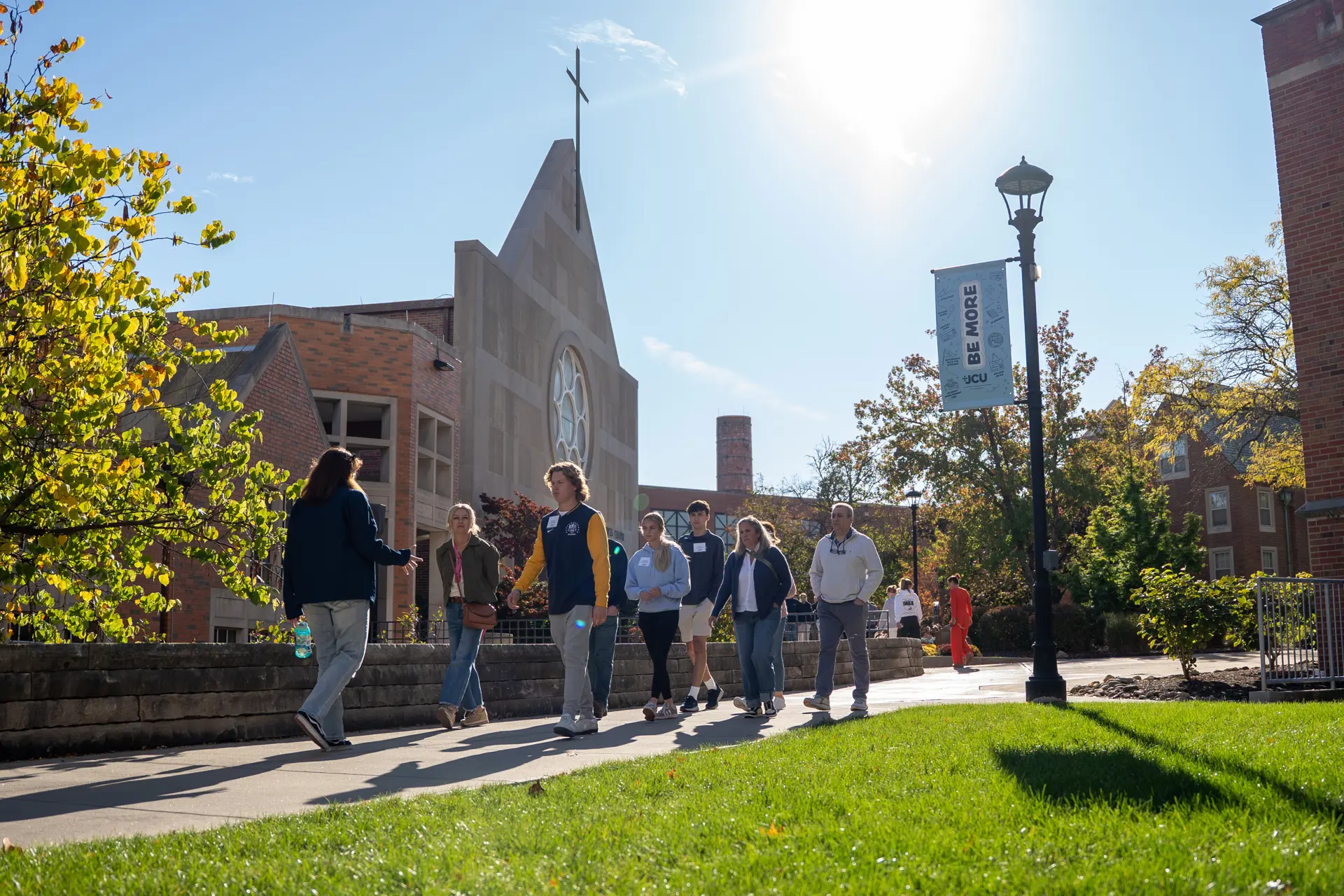
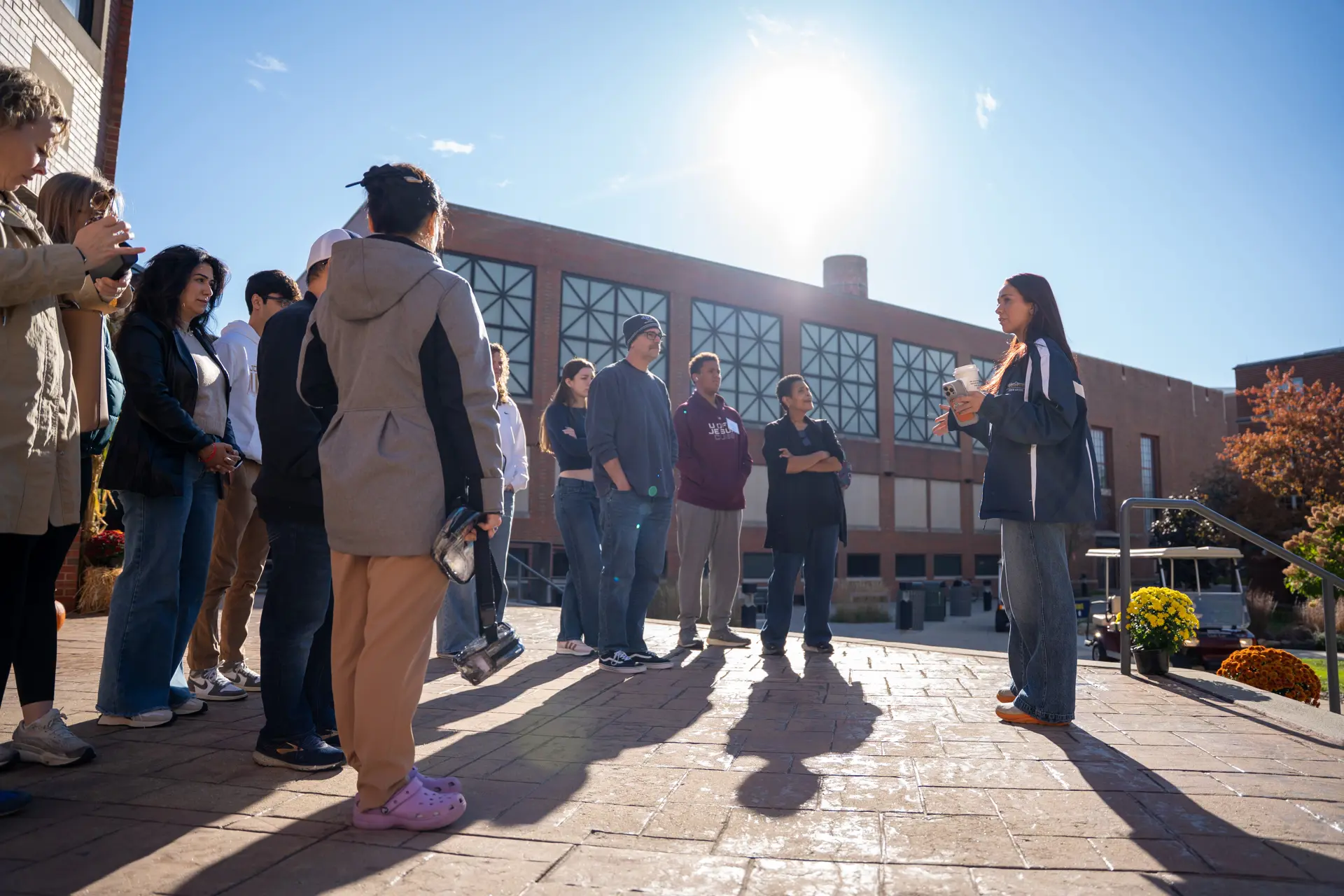
Of course, there are standard tour components: an engaging video, introductions from staff, a walk through academic buildings and residence halls. Student guides lead visitors one-on-one or in small groups.
But doing a campus tour right is about more than checking boxes. Admissions teams say there’s no single “right way” to tour. But there are smart strategies: arrive with a shortlist of priorities, ask questions that prompt real answers and pay attention to what’s happening off script. Today’s tours are layered experiences designed to help families test that instinct.
Visits, a layered approach
When the No. 1 major is “undecided,” flexibility matters. Will the campus sustain a student’s changes?
At BGSU, students who shift academic direction are still at home, says Erin Heilmeier, assistant vice president and director of admissions. The university’s Life Design program helps students map academic interests alongside career exploration.
Campus life plays a central role in that process.
An initial visit, Heilmeier says, is often more experiential. Students are asking, Can I see myself here? On follow-up tours, the questions include, How do I pay for this? What does this academic program actually look like on a typical day? What resources are in place if I pivot?
“At any university, you live there,” Heilmeier emphasizes. “Your entire experience includes the support you receive inside and outside of classrooms.”
Most first visits include familiar elements: a presentation, guided tour, Q&A session and often a meeting with an admissions counselor. But today’s tours are increasingly personalized. At BGSU, prospective students can request specific meetings tied to their interests — and even select a tour guide by sharing basic information such as intended major, hometown and extracurricular involvement.
“If they’re coming for a custom day visit, we make sure they’re connecting with someone who can share relatable insight,” Heilmeier says.
Tour guides often follow up afterward with a postcard, remaining a resource long after the walking portion ends.
At the University of Mount Union in Alliance, personalization shows up in small but telling ways. Students who schedule meetings with admissions staff, faculty or coaches aren’t handed a campus map and pointed across the quad.
“Rather than giving them a map and showing them where to go, we are ‘unreasonably hospitable’ and make that soft handoff,” says Kaetlynn Furda, director of admission and a Mount Union alumna.
Personalization starts before prospective students step onto campus.
“From the first communication,” Mann says of JCU, “everything is crafted to design an experience that creates a sense of belonging.”
Great expectations, dialing in
By the third campus, the presentations can start to sound alike. What separates one visit from another? It isn’t the polished video, it’s what happens in between.
“How consistent is what you’re hearing with what you’re actually seeing?” Furda asks. “It’s easy to talk about values. It’s more important to see them lived out.”
Expectations can be big, and colleges want to represent. But they get real. There’s a balance. Dorm room options are on display. There are suites, but they want prospective students to see the gamut.
Colleges recognize that, with statistically stagnant or slightly declining enrollment, personalization is a plus. Shiny objects don’t sell a school, but families still want to know the details.
“People know so much more about the college experience. Now there are different expectations,” Heilmeier says. “They expect us to have nice residence halls and air conditioning in those rooms. They expect laundry. We show them this is available and how we can exceed that with things like meal delivery robots on campus.”
Again, transparency rules.
On some especially hot days last academic year, Molnar says the university rolled out ice cream trucks and slip-and-slides for lighthearted chill time in front of traditional dorms. “We share the real experience,” she says. “Students who are looking to find their home know what they are getting.”
What really matters?
Define three non-negotiables and three nice-to-haves. Those might include affordability, academic flexibility, campus feel, support systems or distance from home. Then build from there.
Leah Pritchard tells prospective families to come in with a “bucket list.”
“You should already know what you can’t live without,” she says. “And what would be nice but isn’t a dealbreaker.”
This explains why multi-visits matter. When Pritchard was touring campuses, the fitness center and nearby city options were high on her list. In retrospect, she says, “that mattered to me.”
After a second visit, what mattered was “feeling relaxed on campus.”
For her mom, the buy-in was about how the campus looked and felt. “She wanted it to look like college,” Pritchard says with a laugh. Those priorities don’t have to match. But they should be clear.
Pritchard wanted to know she could access the latest technology in the classroom. Still, “I’m a paper and pencil person,” so that was important but not the be-all-end-all. Involvement in collegiate athletics spirit was key. Hailing from Albion, a rural New York farming town, off-campus amenities in Cleveland were essential. Campus engagement: critical. She was a do-everything in high school.
“There’s never going to be one school that’s perfect,” says Pritchard. “But there’s going to be one that’s pretty close.”
Just ask
Majors, internships and financial aid are table stakes. Go deeper. What does a Tuesday night look like? What do students do on weekends? And don’t forget safety.
“It’s one question I asked that stumped a lot of tour guides when I was visiting schools,” Pritchard says. “I want to hear the answer to, ‘Do you feel safe walking to your car at night? What about walking back to a dorm?’"
Asking provided reassurance and information about campus and local authorities and escort services.
“Safety and security is something families don’t always ask about, but they should,” she says.
Trending
-
1
-
2
-
3
-
4
-
5